AI Escalation Sequencing for Buyers Who Have Gone Dark Across Every Channel
AI distinguishes billing blockers from avoidance to reset collection sequencing.
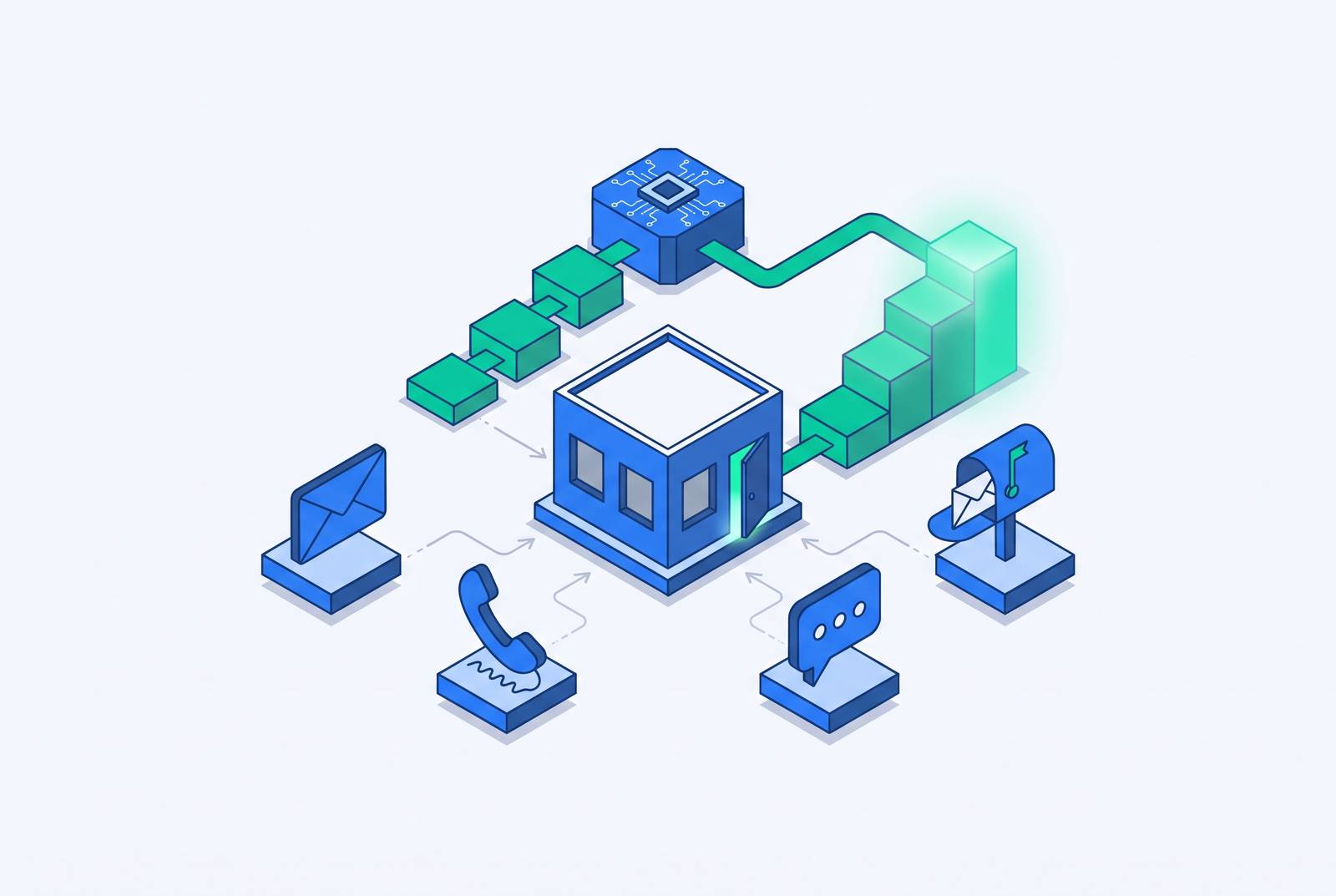
AI escalation sequencing for buyers who have gone dark across every channel uses silence to change the next action. It distinguishes execution-level AR blockers, including missing W-9s and portal friction, from non-responsive buyers, then adjusts channel, tone, timing, and escalation level. The aim is to get paid, but the sequence must follow shared compliance rules and leave the right decisions to humans.
Why aging buckets fail buyers who go dark
Two buyers in the same 60-day aging bucket can have completely different payment probabilities. One may have a billing blocker, while the other is avoiding contact. Yet static aging logic puts both accounts on the same schedule, with calls early, escalation later, and write-off after a set time. The calendar is doing a job it cannot do.
That flaw costs even more when neither buyer replies. Silence advances the schedule without changing the reasoning behind it, so the next reminder inherits the last reminder’s blind spot. The eventual write-off threshold reflects a deadline. Traditional agencies can follow a similar pattern, working accounts for a fixed window before returning them as uncollectable. The workflow has run out, but that does not establish that recovery has become impossible.
What it means for a buyer to "go dark" across every channel
A buyer who ignores one email is not dark. A buyer with zero response across email, SMS, phone, and portal over a defined window is. This gives the system a state it can measure before it adds pressure. Slow payment means the balance is still unpaid, while darkness means the buyer has not engaged. They are not interchangeable diagnoses.
Even complete silence can have different causes. Contact data may be stale, the buyer may be disputing silently or facing financial distress, or deliberate avoidance may be the explanation. A missing W-9, a purchase order discrepancy, or a supplier portal login failure can also leave a workflow stuck without producing a reply. Another stern email will not repair a login. The sequence has to distinguish a blocked process from an unwilling payer because each calls for a different next step.
Serrala’s 2026 analysis of agentic AR places agents’ value in the “messy remainder,” where aging and overtime tend to accumulate. Dark accounts fit that description precisely because their lack of response does not explain itself. The AI’s first job is therefore classification. It needs a working account of why the buyer is silent before deciding how to break that silence.
How AI reads silence as a data point rather than an endpoint
In static rules-based logic, no response usually means waiting and retrying the same action. In AI sequencing, non-response updates a probability model and changes what happens next. The system combines payment history, customer behavior patterns, invoice characteristics, channel engagement, and timing to form a working hypothesis. Silence becomes evidence. That hypothesis helps the system choose the next channel or escalation path without claiming to know what the buyer intends.
For example, silence after two email attempts raises the probability that email is the wrong channel for that buyer. The system adjusts channel weighting rather than assuming that the third subject line will possess magical powers. But when silence comes with a recent dispute flag, it points toward a billing blocker. That account should route differently from a dark account with no dispute signal. The distinction is between predicting what might happen and selecting an action in response to the evidence.
The five-layer escalation sequence for a buyer who has gone dark
The first layer is predictive triage before outreach begins. Once an account meets the defined dark-buyer condition, the AI ranks it by value at risk, payment likelihood, dispute status, and customer relationship weight. Those factors determine its treatment path, which may include a soft reminder, statement resend, collector call, dispute handoff, sales escalation, credit hold review, legal review, or agency placement. Serrala describes this ranking as combining value at risk with likely payment behavior, while leaving the decision to press a key account during renewal with a human.
The second layer is multichannel sequencing calibrated to the buyer’s profile. When the initial treatment produces no response, the system selects the next channel using observed response patterns. Some buyers respond to email, others to SMS, and others need voice outreach. Procurement platforms such as Coupa and Ariba also belong in the picture because a buyer who is silent on direct channels may still have an active portal status that the AI can read and act on.
The third layer is a pattern interrupt after text-based channels fail. The system looks for a channel or format the buyer has not yet ignored and may calculate that a voice interaction is the next best action. Voice’s value here comes from changing a failed pattern. If phone outreach has already failed too, voice cannot simply be treated as an untried channel, and AI-generated voice brings separate compliance requirements regardless of its predicted usefulness.
The fourth layer addresses genuine unreachability through contact data enrichment. Bounced emails, disconnected numbers, or the departure of the invoice contact point toward a different problem from deliberate avoidance. The message may never reach someone who can decide. AI-powered enrichment keeps checking dark accounts for up-to-date contact information without waiting for a collector to mark the account uncontactable. Although this is a distinct layer in the model, continuous enrichment means stale data need not wait its turn behind more unsuccessful messages.
The fifth layer is long-horizon re-engagement when earlier efforts have not restored contact. Instead of abandoning the account after weeks, the sequence adjusts channel, tone, and timing over months. An account dark for six months needs a message framed differently from one that just stopped replying, and new contact data can change channel weighting again. Persistence is not permission to repeat indefinitely. Rather, low marginal outreach cost makes the write-off threshold a policy choice instead of a consequence of exhausted staff capacity, subject to the same contact rules and human boundaries as every earlier layer.
The compliance constraints that govern how hard the sequence can push
Regulation F’s seven-calls-in-seven-days presumption is a rebuttable compliance threshold on phone contact. Staying below that threshold while surrounding the same buyer with texts, emails, voicemails, portal notices, and payment links does not establish that the contact pattern complies with the rules. The whole contact pattern needs scrutiny. A sequence therefore needs shared controls across channels.
The FCC ruled on February 8, 2024, in FCC 24-17, that AI-generated voices are “artificial” within the meaning of the Telephone Consumer Protection Act. Under the exemption at 47 CFR 64.1200(a)(3)(iii), artificial and prerecorded debt collection calls to a residential line are limited to no more than three per consecutive 30-day period. Exceeding that limit requires prior express consent. California’s AB 2905, effective January 1, 2025, requires callers to say that a call uses an AI-generated voice. The system must check which of these rules apply to the contact being made when it decides whether to escalate to voice.
Fragmented systems make that control harder to maintain. A dispute received by email can sit in one conversation log while a disconnected dialer places an automated collection call that ignores it. That is a compliance exhibit. A misconfigured AI rule can repeat the same violation across thousands of accounts in a single day. An AI-handled payment negotiation remains a collection communication under federal law, and the creditor or agency using the platform remains responsible for its messages.
What governance has to be in place before the sequence runs
For a finance leader, the operational task is to define permissions before the system touches a dark account. Which escalation levels require human review, and what dollar thresholds trigger a collector? Which accounts must be kept out of AI outreach, including key relationships in the middle of renewal or accounts in active legal proceedings? Those boundaries cannot be left to improvisation. Serrala’s analysis explicitly keeps the decision to press a key account during contract renewal with a human, even when software handles prioritization.
The audit trail needs to record each action, channel, message, and the reasoning behind each escalation step in a form that survives regulatory examination. Authorization must also be clear at each step. Major financial institutions have begun to limit or block third-party agents when they cannot tell whether a user asked for an action or the agent acted without permission. A sequencing system that cannot demonstrate its authority creates exposure for both parties.
A unified policy engine must govern quiet hours, consent status, dispute flags, and contact frequency across email, SMS, voice, and portal activity. The finance leader’s question is therefore not simply whether each tool has controls, but whether those controls act on the same account state. Without that shared state, one channel can keep pushing after another has received information that should change the sequence.
Where in-house AI sequencing ends and agency escalation begins
In-house AI sequencing is strongest where the customer relationship still has value and persistent multichannel follow-up may recover payment. It also fits situations where the finance team wants to control communication and terms. Those are reasons to retain the account while recovery remains uncertain. The boundary with third-party escalation is a strategic choice about the relationship and the remaining recovery options, rather than a limit on how many reminders software can send.
Third-party agencies have structural advantages in legal escalation, credit bureau reporting, and accounts where the creditor has decided to exit the relationship. In exchange, they charge a significant portion of each dollar recovered and communicate under their own brand. A practical handoff point is reached when all five layers have run without response and legal action or formal agency placement remains. AI-driven recovery may work at earlier stages, but governance still sets what the system can do without human review.
How can you tell whether your AR stack handles customers who ignore invoices and calls?
Diagnosis starts with what changes after zero response across two or more channels. Does the system select a different next action, or retry the same one on its next scheduled date? A calendar can automate the second option perfectly. It still cannot explain why the buyer is silent.
The next questions concern diagnosis and reachability. Does the system distinguish a dark buyer with a clean payment history from one with a dispute flag, and route them differently? Can it account for missing W-9s, purchase order discrepancies, and portal friction before treating the case as avoidance? Does failed contact automatically trigger refreshed contact data, or does a stale address quietly stop progress? A failed delivery is not a refusal to pay.
The remaining questions test control and adaptation. Does the stack maintain one audit trail across email, SMS, voice, and portal activity, and does it define which escalations require human approval? Does it track how long an account has been dark and adjust tone and channel weighting, rather than use the same template at day 5 and day 95? If most answers are no, the stack is static logic with automation attached, whatever the label says. Serrala recommends beginning with agentic capabilities on a defined segment before expanding permissions, so the next step need not be a full platform replacement.