AR Automation Software and Dunning Workflow Capacity Scaling
Adaptive dunning learns customer payment patterns to recover more cash without adding staff.
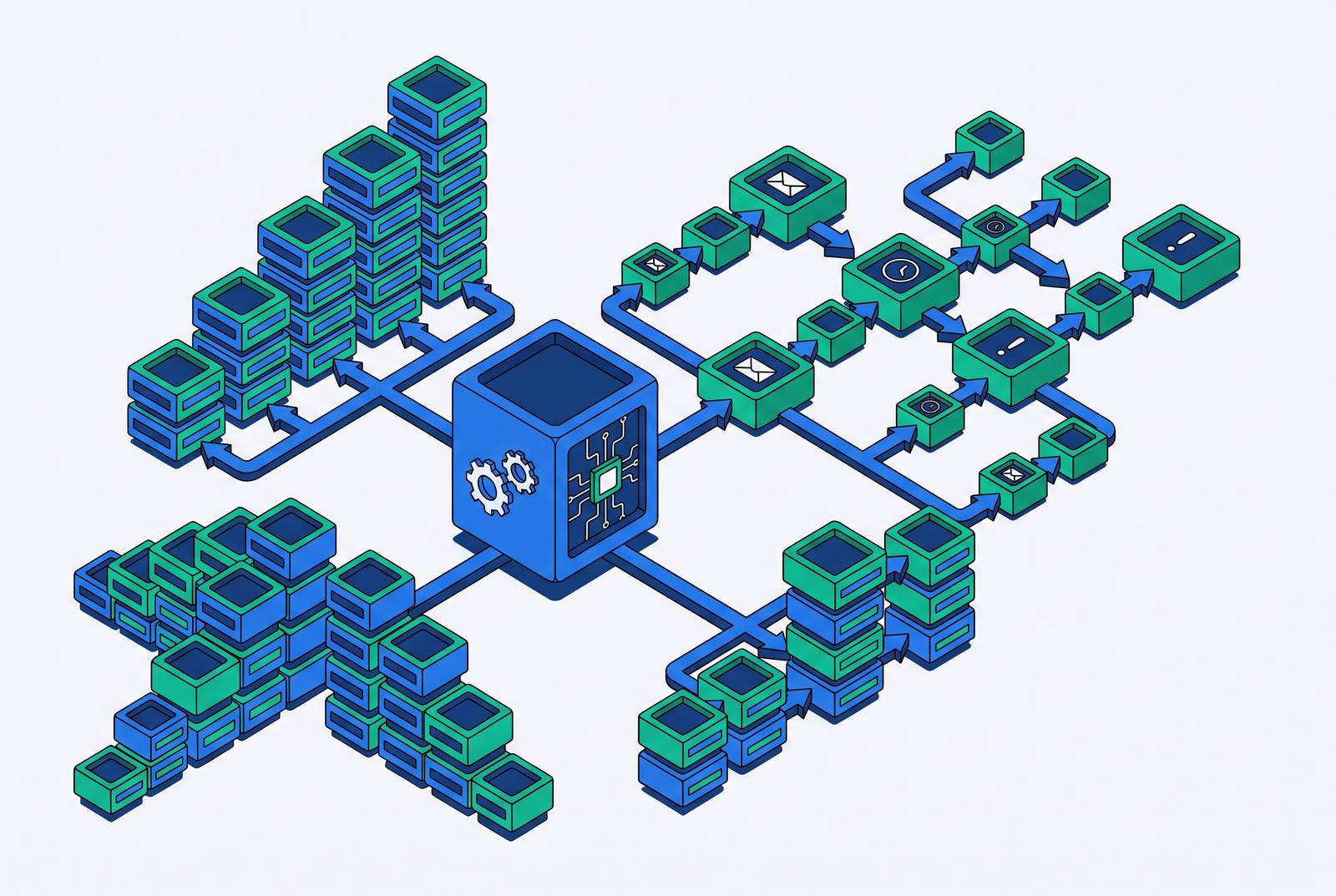
At some point, the reminders stop working. Not because your team got lazy. Because the sequence that sends them never learned anything. AR automation software changes that by making dunning follow-up adapt to how each customer actually behaves. It is that shift, not faster emails, that lets collections scale when invoice volume doubles.
Why dunning workflows become the collections bottleneck as invoice volume grows
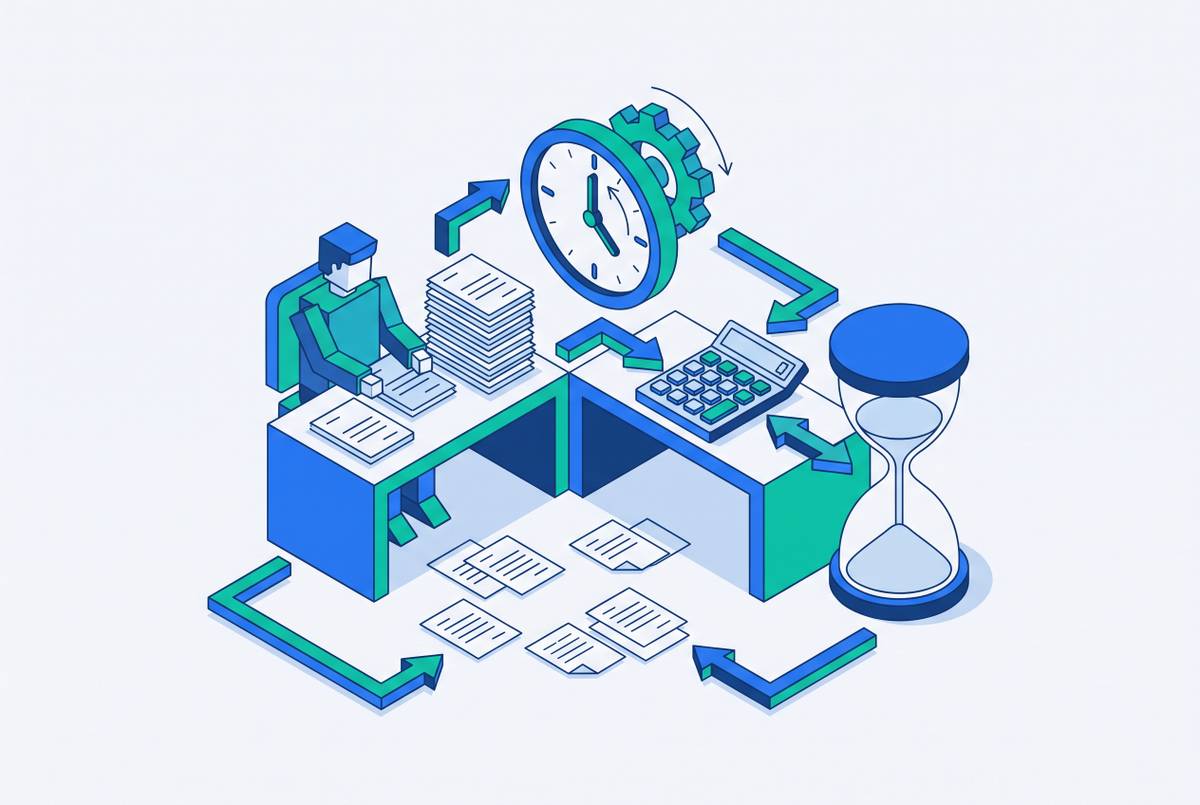
Static dunning sequences break under volume for a structural reason, not because your collectors are sloppy. A fixed sequence sends the same message on the same cadence no matter what the customer did. A chronically late payer gets the same treatment as a first-time delay. The reminder never learns that one account always pays on day 45, or that another needs a new contact before anything moves.
As invoice volume grows, the exceptions grow right along with it. Disputed invoices, missing W-9s, supplier portal requirements, wrong contacts. Each one is a small operational snag, and a fixed sequence simply cannot reroute around it. So more invoices age past their payment terms. Not because customers refuse to pay. Because the follow-up never adapted to whatever actually blocked the payment.
Finance teams feel this as a shift from proactive to reactive. They stop watching the aging curve and start chasing late payments only after the cash forecast comes up short. Tabs' 2026 AR guide makes the point directly: when billing variables are managed manually, collections become reactive. You find out about the problem after it is already expensive.
The obvious fix is more people. But adding headcount to chase more invoices with the same static logic just produces the same aging distribution, with a bigger payroll. You have not fixed the sequence. You have just made the broken sequence run louder.
What AR automation software actually replaces in a dunning workflow
Traditional AR software runs on fixed rules and manual triggers. It sends static dunning cycles with generic reminders, matches payments by hand, and reports on history rather than predicting the future. Credit rules stay frozen in time. Emagia's 2026 AR buyer's guide lays out the contrast plainly.
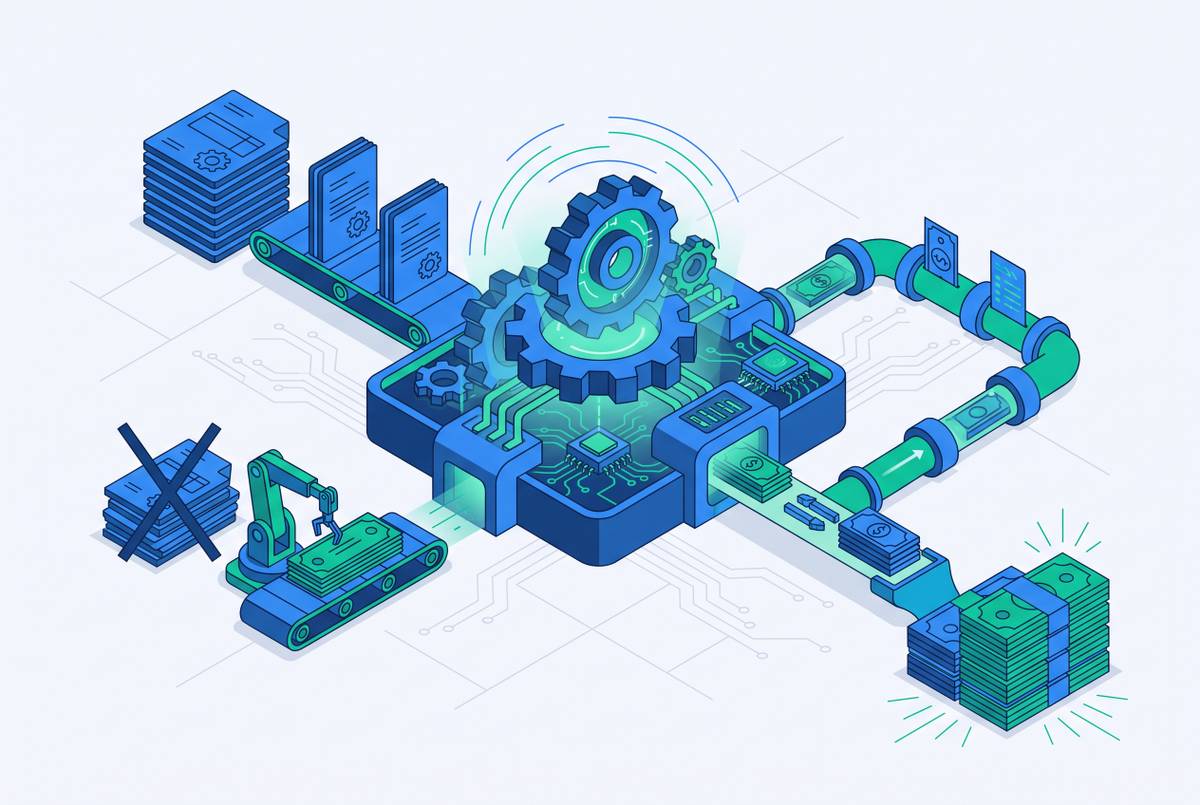
AI-powered AR automation does something different. It predicts which accounts will pay late and builds collections outreach around that behavior. It applies cash automatically. It forecasts cash flow in real time. It scores credit using live data instead of last quarter's snapshot. The difference is not cosmetic. It changes what the tool is doing moment to moment.
The concrete steps automation handles are unglamorous but specific. It generates invoices from contract terms. It delivers them to the right contacts or portals. It sends multi-step follow-up sequences calibrated to invoice age and customer segment. It matches incoming payments. And it surfaces exceptions for a human to review. That is the full loop, per Tabs' AR automation guide.
What it does not replace is judgment. The account where a conversation decides whether you get paid or write it off. The dispute that needs commercial sense, not another reminder. The escalation to legal. Those still need a collector. The productivity gain on these accounts comes from how well the software and the person hand off to each other, not from deleting the person.
How behavior-driven dunning recovers more from the 31–60 day aging bucket specifically
The recovery advantage of adaptive dunning shows up strongest in the 31-to-60-day window. That is the point where a static sequence has already spent everything it knows. A fixed three-step reminder cycle typically runs its course by day 31. After that, nothing happens unless a collector manually intervenes.
Adaptive dunning keeps working past that point. It escalates the channel. It adjusts the tone. It reroutes around known blockers like portal requirements or missing documents. That is why the improvement concentrates in the mid-aging window rather than the earliest bucket. The early reminders were never the problem. The silence after them was.
Bishop Lifting makes the case concrete. Operating across dozens of branches, the company reduced overdue receivables by more than a third after deploying Stuut. The improvement showed up immediately in the 31-to-60-day bucket, exactly where unresolved deductions had been piling up. That is the static sequence's graveyard, and adaptive dunning went in and cleaned it out.
Agicap's dunning software guide adds the supporting numbers. Mid-market companies that implement systematic automated reminders can reduce average days delinquent by up to two weeks. They also meaningfully increase the odds of collecting late invoices within a short window of the due date. The mechanism is forecasting: modern platforms predict when cash will actually land based on payment history and contract terms. That lets you intervene on likely-late accounts before the invoice has a chance to age.
How automation scales dunning capacity without scaling headcount
Before AI dunning, collectors spend most of their time on early-cycle routine follow-up. Recently past-due invoices, standard reminders, the same email to the same contact. Automation changes the shape of that day. The routine share drops sharply, and the freed hours move to mid-to-late-cycle accounts where human judgment actually changes the outcome.
KNIME's internal deployment shows what that time compression looks like in practice. Moving from spreadsheets to an AI-assisted dunning process reduced manual effort by a large majority and cut time per case to around three minutes. Three minutes for the routine stuff. The rest of the day goes to the accounts that need a person.
Multi-entity operations make the effect visible at scale. Bishop Lifting runs 45 branches. A centralized automated sequence handles the same routine follow-up across every branch at once. Collectors focus on the accounts that stalled for operational reasons, not the ones that just need a nudge. Agicap's guide frames it as a structural shift: collections get standardized across entities, and teams move to exception handling and strategic cash management.
The headcount objection deserves a straight answer. Vendor materials do overstate AI dunning as a tool for shrinking the team. That is a fair criticism. In most deployments, the real gain is not fewer collectors. It is more collections output and better recovery rates from the same people. Organizations that treat it as pure headcount reduction skip the work of designing a good human-AI handoff, and they underperform.
The operational blockers that automation must handle, not just the reminders it sends
At scale, most unpaid invoices are not unpaid because nobody sent a reminder. They are unpaid because a specific blocker never got resolved. A dunning sequence that only sends reminders never touches that blocker. The missing W-9. The certificate of insurance nobody asked for. The supplier portal submission sitting in a Coupa or Ariba queue. The purchase order mismatch. The payment terms in the ERP that do not match the signed contract.
A static sequence ignores all of that. It sends the reminder to whatever contact is on file, whether that person still works there or not, whether the invoice is stuck in a portal queue or not. The message goes out. Nothing changes.
Modern dunning software answers this with dispute and escalation management. When an invoice is disputed, the workflow pauses or adapts. Documentation gets attached. Escalation paths trigger automatically. Agicap's guide identifies this as a core capability, and it matters more than reminder frequency ever will.
Customer master data is the hidden constraint underneath all of it. Teams that migrate records without an audit discover the problem months later. Emails bounce. Billing addresses are outdated. Payment terms in the ERP conflict with the executed contract. The automated dunning machine is running at full speed, aimed at the wrong targets. Effective AR automation pairs behavioral dunning logic with the operational ability to navigate portals, escalate to the right person, and clear the actual blocker. Not just send more polite nudges.
The cleanest fix is upstream. Tabs' 2026 AR guide notes that most billing errors begin in the gap between what the contract says and what gets invoiced. Platforms that address this ingest the signed contracts directly and use AI to translate billing terms into invoice logic. Fewer errors on the way out means fewer disputes stalling collection on the way back.
ERP integration as the primary implementation risk for dunning automation at scale
Most AR automation projects that fail do not fail because the software is bad. They fail because the ERP integration was harder than anyone planned, and the dunning sequence ran on stale data. Hidden custom code breaks standard connectors. Timelines that looked optimistic stretch far past the original date.
The dunning-specific risk is painful and easy to picture. If the platform is not getting current payment status from the ERP, it keeps sending reminders on invoices that are already paid. The customer receives a dunning email for money they sent two weeks ago. That damages the relationship and kills confidence in the automation overnight.
Look for three things in the integration. Native ERP connectors that sync invoices and payments without manual mapping. CRM alignment that pulls contract data directly. API flexibility for custom environments. Emagia's 2026 AR buyer's guide names the environments where this matters most: SAP S/4HANA, Oracle ERP, and NetSuite. Those are the systems where deep integration decides whether the automation actually scales.
The data quality problem compounds the integration risk. Even a clean technical connection fails if the customer master data holds outdated contacts, wrong billing addresses, or payment terms that contradict executed contracts. This failure typically surfaces two to three months after go-live. Implementation is declared complete. Everyone celebrates. Then the bounced emails start.
How leading AR automation platforms handle dunning workflow scaling differently
The platforms that scale dunning well do not all work the same way. They apply intelligence at different layers: the contract, the collections workflow, or the cash application. Pick the wrong category and your team fills the gap manually.
Quadient AR, formerly YayPay, sits in the mid-market predictive collections camp. It forecasts cash flow and automates collections outreach, ranking accounts by payment history and risk signals. It is aimed at teams processing roughly 500 or more invoices per month. The intelligence lives in the collections workflow itself.
Tabs takes a billing-led approach. It sits downstream of CRM and CPQ, ingests signed contracts, and uses AI to translate billing terms into invoice logic. It applies contract terms and payment history to dunning workflow triggers, including trained models for usage thresholds, escalators, and milestone triggers. It suits companies where invoice accuracy drives dunning quality, because an error in the invoice becomes a dispute that stalls collection.
BILL is the small-business option. Minimal setup, integrates with QuickBooks and Xero. NetSuite sync requires the Enterprise tier. Per-user monthly pricing with extra per-transaction fees. For a company processing a few hundred invoices a month, it removes most manual AR work without the weight of a dedicated platform.
Lido handles document extraction and cash application. It pulls remittance data and payment information from any document format, then applies it to reconciliation. It fits large organizations ready for a full AR transformation. LedgerUp positions itself for B2B SaaS buyers, automating end-to-end AR workflows with repeatable steps and exception routing to finance for review.
The question to ask about any of them is simple. Does the platform adapt follow-up based on how the customer pays, or does it execute a fixed sequence faster? The first scales capacity. The second scales volume without improving recovery.
What finance teams should evaluate before selecting an AR automation platform for dunning scale
Platform selection is a workflow design decision before it is a software purchase. The questions you ask in a demo reveal whether a tool will scale your team's capacity or just digitize the same static sequence. Start with dunning intelligence. Does the platform adapt cadence, channel, and escalation path based on each customer's payment history and invoice risk? Or does it run the same sequence for every account like a metronome?
Then look at operational blocker handling. Can it navigate supplier portals like Coupa and Ariba? Manage missing document requests? Route escalations to the right contact? Or does it stop at sending email reminders? That line separates real AR automation from a fancy mail merge.
Audit the customer master data before go-live. Contact emails, billing addresses, and payment terms need to match executed contracts, not just the ERP records. Skipping this means your automated dunning machine aims at the wrong targets from day one.
Design the human-AI handoff on purpose. How does the platform route accounts from automated follow-up to a collector? At what trigger? Organizations that get this handoff right consistently outperform those that treat automation as a full replacement for collector judgment on complex accounts.
For multi-entity companies, require centralized dunning controls with room for entity-level or segment-level customization. Agicap's guide identifies centralized controls and consolidated visibility as core requirements for mid-market multi-entity finance teams. One dashboard, but not one-size-fits-all logic.
Finally, be honest about timelines. Ask the vendor for the actual median time-to-production for customers with a comparable ERP environment, not the best-case estimate. The gap between the quoted timeline and the real one is where most implementations lose momentum.
Capacity scales when the platform adapts to behavior and handles operational friction. It does not scale when a tool simply automates a static sequence at higher volume. That is the whole decision, and it is worth getting right before you buy.