collections-as-a-service versus self-serve AR software: how the delivery models compare
Self-serve software caps your team's throughput; managed services trades control for speed.
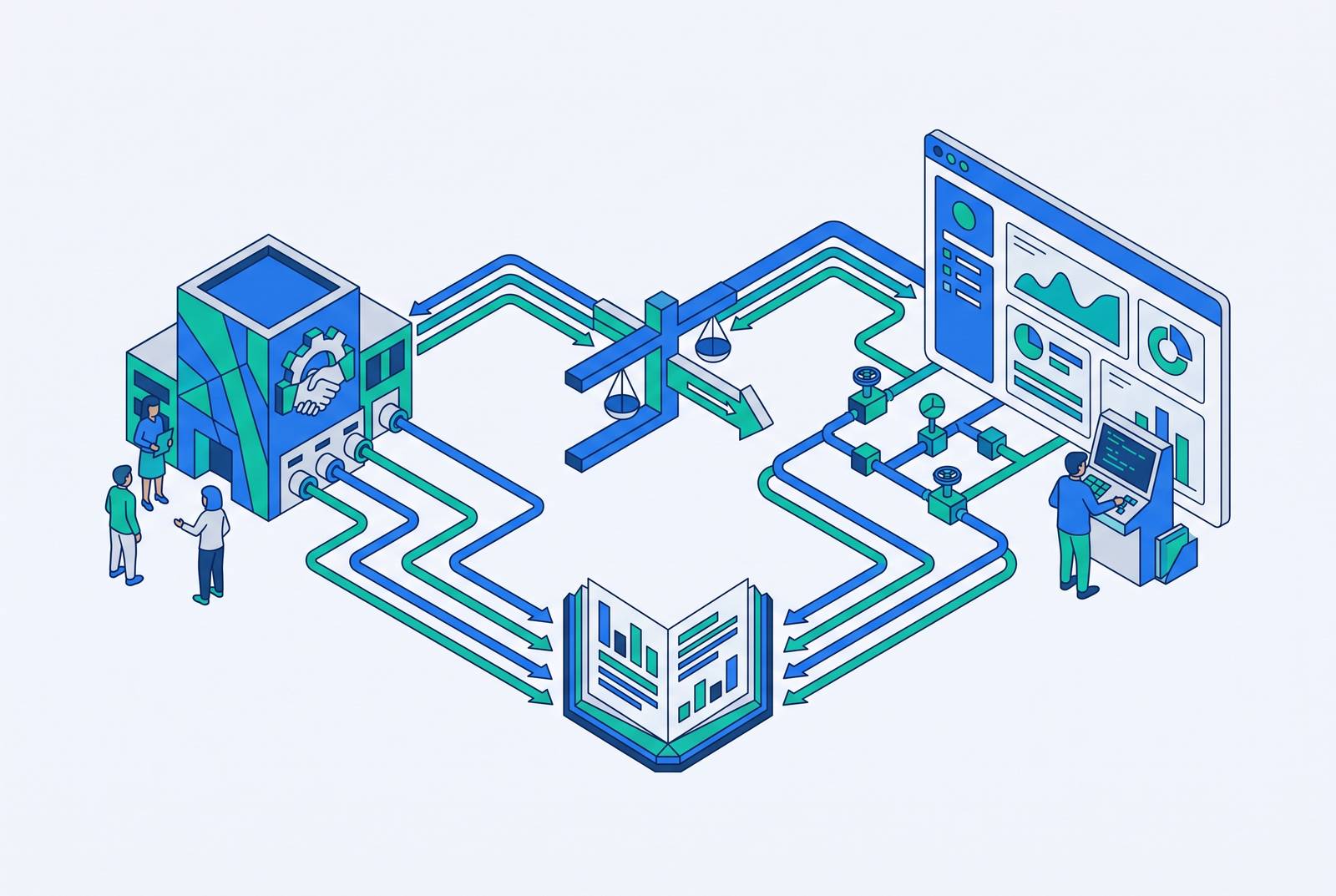
When a company shops for AR modernization, it thinks it's shopping for software. It's actually shopping for an answer to one question: who does the work when things get messy? Most buying conversations spiral into feature checklists: automation depth, ERP integrations, dunning logic. Meanwhile the real question sits untouched. When an invoice stalls in a supplier portal, when a W-9 goes missing, when a customer ignores three reminders in a row, somebody has to deal with it. Self-serve AR software and collections-as-a-service answer that question in opposite ways, organizationally rather than just technically. The model that fits a company has less to do with its size or its budget than with its operational capacity, the complexity of its invoices, and its appetite for chasing down the unglamorous blockers that actually hold up payment.
How Self-Serve AR Software Works
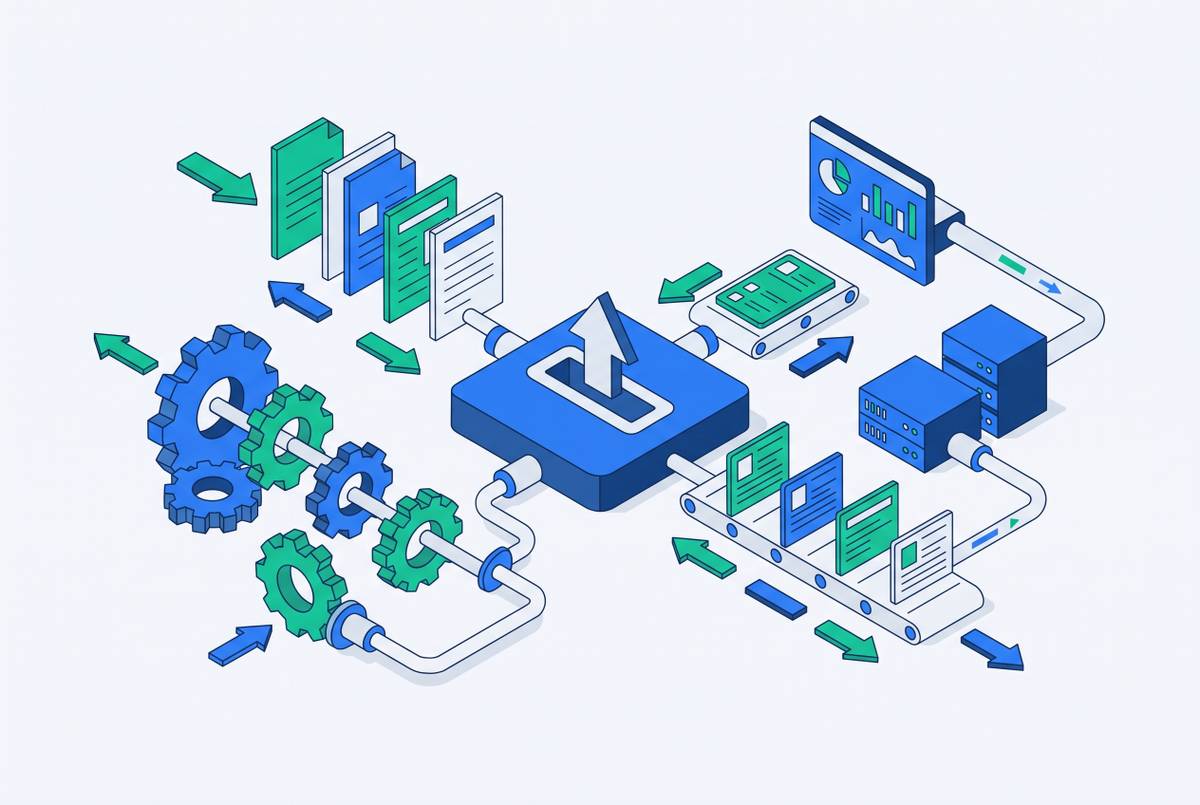
Self-serve AR software automates the workflow around collections. It does not automate collections itself. Queue management, escalation decisions, exception handling: all of that stays with the internal team. The model sits as a layer on top of an ERP or accounting system. Invoice data flows in, reminders go out on whatever schedule the user sets, notes get logged against each account, and a dashboard shows which invoices are overdue and by how much.
AR Collect is a useful example of how this works in practice. It connects to the company's accounting software and automates the process of chasing overdue invoices, sending reminders on a set schedule, logging notes at the customer, invoice, and promise-to-pay level, and giving the team a live dashboard of every outstanding account. The software hands the team a worklist. The team still has to work it.
First-generation AR tools follow this pattern closely: they generate the list and draft the message, but a human has to send it, follow up on it, and decide what to do when it doesn't land. That caps throughput. A three-person AR team can make roughly 15 to 20 outbound contacts a day, and no amount of software polish changes that math, because the bottleneck is human hours, not tooling.
AI-native self-serve platforms move that ceiling considerably. An AI calling agent can get through far more contacts per hour than a person can, so a portfolio of 500 overdue invoices that would take a human team weeks to work through can get covered in an afternoon. That's a real shift in capacity, even though accountability for the judgment calls doesn't shift with it. What doesn't shift is who's accountable for the judgment calls. Someone on the buyer's side still has to configure the rules, decide how to handle exceptions, and make the call on when to escalate. The software executes faster. It doesn't decide for you.
How Collections-as-a-Service Works
Collections-as-a-service sounds like a single category. It's really at least three different businesses wearing the same label, each with its own economics, its own relationship risk, and its own best-fit use case.
The first sub-model is the offshore BPO arrangement: a team of people, usually overseas, working AR on an hourly rate. Execution transfers from the buyer's staff to someone else's staff, and cost scales directly with hours worked. It's labor arbitrage, not technology.
The second is the contingency collection agency. These firms engage only on files that are already past due, and they get paid a cut of whatever they recover. They're built to extract money from a stalled account, not to keep that account as a customer going forward. That's a fine tool for certain accounts. It's a blunt one for others.
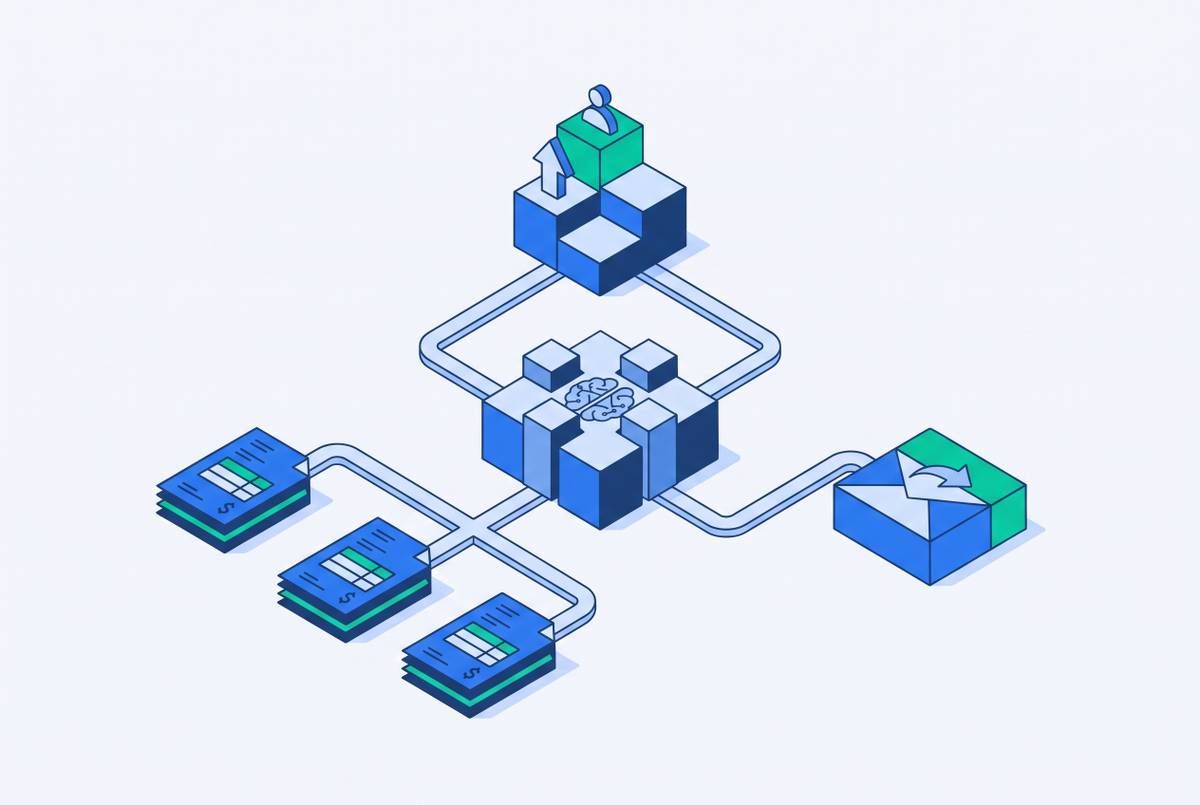
The third is the AI-powered managed AR platform: a service that takes on full execution responsibility across the entire invoice lifecycle, including follow-up, portal navigation, inbox replies, and escalation, usually priced as a success-based fee or a flat monthly rate. It functions as an always-on AR team handling follow-up, navigating supplier portals like Coupa and Ariba, replying to customer inbox messages, and managing escalation, with human review available when a dispute needs a person's judgment. Execution moves entirely off the client's desk.
The line between a managed AR firm and a collection agency deserves careful drawing, because the two get confused constantly. Managed AR firms are trained to collect professionally and with an eye toward the relationship from the first day an invoice is sent. Collection agencies show up late, work on contingency, and aren't built around keeping the customer happy. One is built for the whole lifecycle. The other is built for the endgame.
A fourth variation is TreviPay, a managed B2B payments platform that extends net terms across buyer networks and can take on credit risk on behalf of the seller. Funding can come from TreviPay's own capital, from the seller financing itself, or from a third-party bank partner. TreviPay fits companies that want guaranteed settlement, which is a different problem than managing collections.
What each model costs as volume grows
The price tags on these two models look different on a spec sheet, but the number that matters more is how each cost structure behaves once volume goes up.
Self-serve software spans a wide range: accessible pay-as-you-go plans built for small businesses on one end, quote-based enterprise suites with six-figure implementation costs on the other, and a mid-market tier sitting in between. Full-service AR outsourcing, the kind that covers everything from invoicing through cash application, runs considerably higher per month than software at comparable volume. That gap doesn't stay fixed. It widens as invoice count climbs, because outsourced labor scales with the work being done, while software licensing tends to stay closer to flat.
AI-powered collections-as-a-service platforms are pulling fee structures in a new direction, quoting success-only rates well below what a traditional contingency agency charges. That creates a third price point on the table, one that borrows the economics of outsourcing and the speed of software at the same time.
None of this happens in a vacuum, either. A fully-loaded AR specialist, counting salary, benefits, payroll taxes, and overhead, costs well into five figures a year. Buying self-serve software doesn't make that cost disappear if a human still has to sit down and work the queues it generates. The sticker price on a tool is only half the ledger. Whoever's clocking in to use it costs just as much.
The operational blockers that neither model handles automatically, and why that gap is decisive
Picture an invoice that's been sitting unpaid for six weeks. The reminders have gone out. The customer has gotten three emails. Nothing has moved, and the reason has nothing to do with collections at all: the invoice got rejected by the buyer's Coupa portal because a line item didn't match the purchase order, and nobody on either side noticed for a month. That invoice is a paperwork problem wearing a collections problem's clothes.
This happens more than most finance teams want to admit. Supplier portals like Coupa and Ariba require the invoice to be submitted correctly, monitored for status, and often manually fixed when something kicks it back. Self-serve software can tell a team the invoice is overdue. It has no way to log into the portal and figure out why. The same goes for a missing W-9, a mismatched purchase order, or an approval that's stuck on someone's desk on the buyer's side. None of those are collections problems. Firing another dunning email into a stalled approval chain doesn't move it an inch.
Self-serve software surfaces the blocker and then hands it straight back to the team: the dashboard flags the invoice as stuck, and a person still has to figure out why and go fix it. A managed AR service can close that gap, but only if its scope actually includes portal navigation, document retrieval, and chasing down the buyer's side of the approval chain, not just sending polite emails on a timer. Some providers' positioning leans into exactly this distinction: handling the portal navigation, the inbox replies, and the missing-document retrieval, not just running the reminder schedule. For companies with complicated billing relationships, that unglamorous middle ground is where the cash actually gets stuck, and it's the piece a lot of AR tooling quietly skips.
Customer relationship risk, where the two models diverge most sharply
In consumer debt collection, the person on the other end of the call is a debtor and nothing else. In B2B, the account that's 60 days late is very often the same account that's supposed to renew next quarter. That single fact changes the entire calculation, because recovering the invoice and keeping the customer are two different goals, and a strategy optimized for one can quietly wreck the other.
Consumer collections are transactional by design. B2B collections are relational, whether anyone admits it out loud or not, and leaning on the wrong tone with a late-paying customer can cost a company a relationship worth many times the invoice in question. Contingency collection agencies, built for recovery above all else, carry real reputational risk when they're turned loose on an active customer account. The amount they recover may not cover what it costs in goodwill.
Managed AR firms are built around a different premise: collecting in the same professional, relationship-aware manner a strong internal AR team would use, every time, by design rather than by luck of which agent picks up the account. Honeywell's experience with an AI-augmented AR platform illustrates the shift this kind of design enables: Razvan Bratu, Head of Quote to Cash at Honeywell, has described the team gaining more time to focus on white-glove service for top customers because the platform handles the routine work. That's the trade a lot of finance leaders are after: software or a service absorbing the repetitive load so people can spend their attention where the relationship actually needs it.
Self-serve software protects the relationship a different way, by keeping every message on-brand and under the company's own control. The cost of that control is that the team carries the entire execution burden, including the awkward calls nobody enjoys making.
Data ownership and visibility, a trade-off that compounds over time
Handing off execution means handing off something less visible, too: the running record of how each customer actually pays. That record is worth more the longer a company keeps it, and it's harder to get back than it looks once it's gone.
Self-serve software keeps all of that inside the buyer's own stack. Payment history, dispute records, communication logs, aging analysis, all of it lives alongside the rest of the company's financial data, in systems the company already controls. Outsourced AR puts that interaction history inside a third party's system instead. Visibility depends on what the provider chooses to surface, and switching providers later means negotiating to get that data out, not just logging into the account.
For a finance team that leans on AR aging data to make credit decisions, forecast cash flow, or score customer health, this isn't a footnote. It shapes how decisions get made day to day. The usual counterargument, that a well-run managed AR firm hands over dashboards and reports that look just like in-house visibility, is fair as far as it goes. But reporting access isn't the same thing as owning the data, and that difference gets expensive exactly at the moment the relationship with the provider ends.
How to match delivery model to operational reality
Three questions decide which model actually fits: does the team have consistent capacity to work AR queues, how complicated is the invoice-to-cash workflow in practice, and how much of the portfolio sits in that unglamorous operational middle ground where blockers, not reminders, are the holdup.
Collections-as-a-service, specifically a managed AR model, fits companies where finance is lean or stretched thin and AR is always losing the fight for attention against higher-priority work, and where invoices run through supplier portals, missing paperwork, or multi-party approval chains that need someone actively navigating them, not just pinging reminders into the void. It also fits when portfolio coverage is inconsistent week to week, since manual teams typically only get through a fraction of overdue invoices before something else pulls their attention away. Collections-as-a-service is built for exactly this gap: collections running entirely off the finance team's plate, with follow-up, portal navigation, inbox replies, and escalation handled end-to-end, and a human brought in for disputes that need judgment. It suits fast-growing companies carrying a real volume of receivables without the budget or headcount for a full AR department.
Self-serve AR software fits a different company: one with a dedicated AR function, even a small one, that can own queue management and escalation itself, with invoices that flow through fairly simple billing relationships rather than portal complexity or constant document disputes, and where brand control over every customer touch matters enough to staff for it consistently. AR Collect suits small and midsize businesses on QuickBooks, Xero, or Sage that want disciplined reminder automation and clean notes logging without hiring anyone new. Emagia suits large, global enterprises that need AI-powered order-to-cash automation, credit management, and working capital optimization running at scale. Quadient A/R, known as YayPay, suits mid-market organizations mainly trying to improve visibility, prioritization, and consistency in how receivables get followed up on.
Collection agencies have a place at the tail end of the lifecycle, on accounts that have already exhausted early-stage follow-up and managed AR options. A hybrid approach, self-serve software for early invoices and a managed service or agency for accounts that have aged out, can work well. It only holds together if the early-stage coverage is genuinely consistent, and not an excuse to underinvest in the early follow-up that keeps accounts from aging.
What AI-native platforms are changing about both models
AI is wearing down the cost and speed gaps that used to separate these two models cleanly, without touching the deeper question of who's responsible for execution. If anything, it raises the cost of leaving that question unanswered.
On the self-serve side, AI-native platforms have broken the throughput ceiling that limited what a human team could get through in a day. An AI calling agent working through a large overdue portfolio in hours instead of weeks changes what a lean team can realistically handle without bringing in outside help. On the managed services side, AI-powered collections-as-a-service platforms have compressed fee structures that used to sit firmly in traditional agency territory, pulling the price of full execution closer to what software alone used to cost.
What hasn't moved is the structural choice underneath all of it. Faster software still needs someone to own the rules and the exceptions. A cheaper managed service still means handing execution to someone else. AI has made both options quicker and more affordable. It hasn't made the question of who does the work when the invoice gets stuck go away.