Invoice Dispute Root Cause Categorization
Naming dispute categories right saves weeks of resolution time and points you toward the actual fix.
Invoice disputes feel random when you're the one chasing payment on a Tuesday afternoon, wondering why finance won't just pay the bill. They're not random. They cluster into a small, predictable set of root causes, and figuring out which bucket a dispute falls into is the whole game. Get the category right and you know exactly who needs to be on the call and how long the fix should take. Get it wrong and you're negotiating with someone who isn't even arguing about the same thing you are.
The scale of this problem is bigger than most finance teams like to admit. An Atradius survey found that roughly one in four B2B invoices in North America gets paid late or disputed, with the average resolution dragging on for 30 to 60 days. Atradius data cited by NetSuite shows that half of all B2B invoices in the US sit overdue at any given moment, with the average company losing close to $40,000 a year to late payments and the disputes trailing behind them. NetSuite's own definition, from April 2026, keeps it simple: an invoice dispute is when a buyer formally or informally challenges an invoice, which usually means delayed payment, reduced payment, or a flat refusal to pay.
Ownership of the problem splits predictably. Accounts receivable owns it on the seller's side, accounts payable owns it on the buyer's side. But resolving anything real pulls in sales, operations, project management, sometimes legal. This isn't a doom-and-gloom story, though. Once you name the categories correctly, disputes stop being mysterious and start being manageable, almost administrative. Boring, even. Boring is good here.
How disputes do and do not get classified (the case for a shared taxonomy)
Ask five AR consultants how many dispute categories exist and you'll get five different answers, somewhere between 5 and 10. That's not a sign the field is confused. It's a sign that different businesses need different levels of zoom.
A large enterprise running complex procurement across dozens of vendors needs a 10-category framework, granular enough to separate a PO mismatch from a three-way match failure from a change-order dispute, because each one routes to a different team. A leaner operational model, like the approach Billtrust laid out in February 2026 covering Administrative, Pricing, Payment, Delivery, and Quality categories, works fine for AR teams who just need a clean way to tag tickets and move on. And for SaaS and professional services firms, where nobody's reconciling shipping manifests, Glencoyne's three-category model (Administrative error, Scope disagreement, Perceived quality issue) covers the territory without over-engineering it.
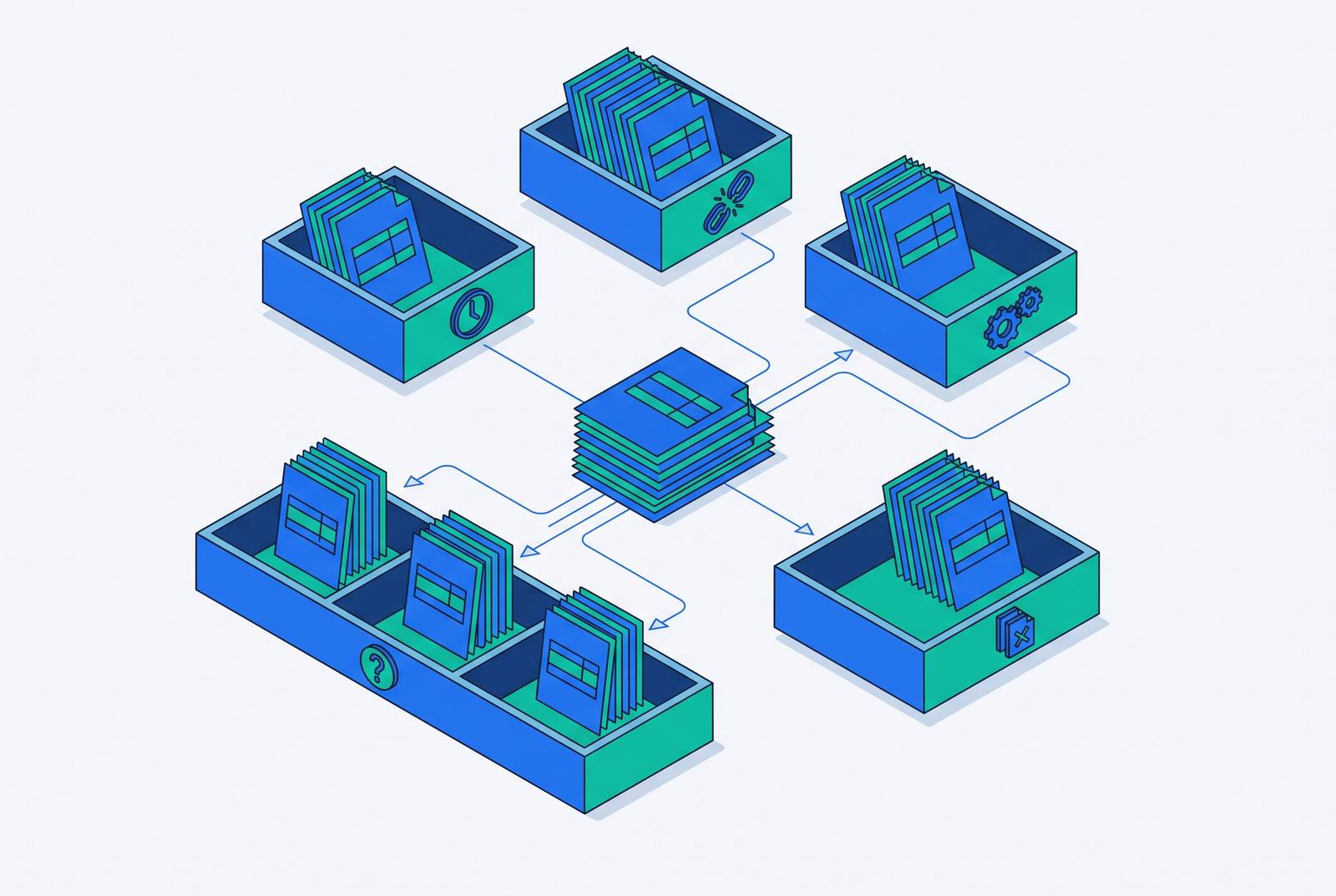
Zoom in or zoom out, the frameworks agree on the same three fault lines. There's an error in the invoice itself: the data is just wrong. There's disagreement about what was actually agreed to, a contract or scope argument. And there's disagreement about what got delivered, a quality or quantity argument. Every framework, granular or not, is just slicing those three fault lines differently.
The best taxonomy is the one your team actually uses every single time, which matters more than picking the "correct" model. A rough classification applied consistently beats an elegant one that half the team ignores by month three. The rest of this piece uses a consolidated taxonomy built to cover the full range of B2B dispute types, organized so each category points to its own fix and its own prevention move.
Pricing and rate errors: the most visible category
This is the one everybody pictures when they hear "invoice dispute." The invoice charges a price that doesn't match the agreed PO or contract rate. Classic version: a vendor bills at list price when the customer negotiated a discount six months ago, and nobody updated the billing system to reflect it.
Someone copies a price from an outdated price list, or a contract gets renegotiated and the change never makes it into the system that generates invoices, and these mundane slips are what usually cause the mechanism. Someone copies a price from an outdated price list. A contract gets renegotiated and the change never makes it into the system that generates invoices. NetSuite puts the figure at around 39% of invoices containing some form of error, and pricing mistakes make up a meaningful chunk of that figure. This category also swallows miscalculated totals, misapplied tax rates, and duplicate charges tacked onto the same line.
The good news: pricing disputes resolve fast once someone actually looks. Line up the invoice against the signed contract or PO, issue a corrected version, done. These shouldn't linger. And notice where the fix points: back at the billing or quoting system, not at the customer relationship. Nobody needs to have an awkward phone call about trust here. It's a data problem wearing a dispute costume.
PO discrepancies and three-way match failures
Different animal entirely. Here, the invoice doesn't match the purchase order, and the buyer's AP system, being a system and not a person, just stops. No judgment call, no phone call, just an automatic hold.
AP software runs a three-way match, comparing the invoice, the PO, and the goods receipt. If any one leg of that triangle doesn't line up, payment freezes. And the triggers are almost always mechanical rather than dishonest:
- A missing or incorrect PO number, which blocks the AP team from matching the invoice at all, even when every dollar amount is correct
- An invoice submitted before the PO details are even finalized
- Informal change orders that skip the original PO entirely
- Billing and procurement systems on opposite ends of the company that were never connected in the first place
A missing PO number creates the exact same payment delay as a genuinely wrong invoice. The AP system can't tell the difference between "this is fraudulent" and "someone forgot to type in three characters." It just holds both.
The fix is usually simple, just annoying: track down or confirm the right PO reference and resubmit. Easy to say, easy to overlook when a team is processing hundreds of invoices a week and nobody's watching for the one missing field. Prevention here has nothing to do with pricing accuracy. It's about talking to the buyer's procurement team before the invoice goes out, not after it bounces.
Quantity and delivery discrepancies
The invoiced quantity doesn't match what the buyer's warehouse actually logged as received. That's the whole category, and it appears constantly in manufacturing, wholesale distribution, and consumer goods, anywhere the physical supply chain and the billing department live in separate buildings, figuratively and sometimes literally.
Common triggers include partial shipments billed as if they were complete, shortages or over-shipments, damage in transit, and unit-of-measure mismatches where a supplier invoices in cases while the PO specifies individual units. Sometimes goods get rejected at the receiving dock but the invoice goes out anyway, because the billing system never got the memo.
Resolving these requires pulling shipping records and comparing them against the buyer's receiving records, which means logistics teams get looped in alongside finance. That's the real snag: this dispute type straddles the line between AR and operations, and resolution stalls constantly because the person fielding the dispute in finance doesn't have access to the warehouse data needed to argue either side of it.
Administrative and documentation errors
Sometimes the charge is completely correct and the invoice still gets stuck, because some piece of paperwork is missing or wrong. The billing address is wrong. Wrong legal entity name. Wrong currency. A missing timesheet, delivery receipt, or proof-of-service document. An incorrect tax ID. An invoice mailed to a contact who left the company two years ago.
Enterprise buyers running procurement portals are especially strict about this. No supporting document, no approval, automatic hold, regardless of whether the invoice amount is flawless. And from the AP side, a missing document looks identical to a missing PO or a wrong price. It all just resolves to the same status: held.
That ambiguity is part of why administrative disputes are such a drag on AR teams. According to a research brief on the topic, 55% of AR professionals name dispute management as their toughest task, and administrative disputes carry more than their fair share of that weight, because fixing them means chasing down documents from other departments (project managers, legal, HR) rather than just correcting a number on a page. The fix itself, retrieving a document and resubmitting, sounds trivial. In practice it's slow, because it depends on someone else's inbox.
Payment terms and contract interpretation disputes
This category is different in kind, not degree. The buyer and seller aren't disagreeing about a typo, they're disagreeing about what the contract actually meant. That's a harder problem, and it doesn't get solved with a corrected PDF.
Common flashpoints: vague net terms like "payment due upon receipt" that never define what "standard" means, verbal agreements that were never written down, contract amendments that got discussed in a hallway or an email thread but never made it into the master agreement, and early-payment discounts the buyer swears were offered that the seller never formally documented.
A documented real-world version of this: one energy company left over $200,000 in potential savings on the table every year because early-payment discounts weren't systematically applied to invoices. That's a two-sided failure, sloppy documentation on the seller's end, sloppy reconciliation on the buyer's end, and neither side alone caused it.
These disputes need a conversation. Two people have to actually agree on what the contract said and what everyone intended when they signed it. According to an invoicequickly.com guide, the prevention move is unglamorous but effective: write down every agreed change before the work starts, every single time, no exceptions for "we'll sort the paperwork later.""
Quality and service disputes
This category resists a quick fix, almost by design. The buyer holds back payment, or reduces it, because the goods or services didn't meet the agreed standard, or arrived late, or arrived incomplete. Damaged goods. A product that misses spec. A consulting deliverable that doesn't match what the client thought they were paying for. Late delivery the buyer argues let them off the hook entirely.
What makes this hard is the subjectivity. Whether work "met the standard" is a judgment call, and judgment calls invite argument. The only thing that cuts through it is documentation: a statement of work, acceptance criteria, milestone sign-offs, something in writing that both sides agreed to before the work started.
NetSuite's April 2026 coverage of invoice disputes notes that handling this kind of dispute badly, slow replies, defensive emails, can end up costing more than the disputed invoice itself. In consulting and professional services specifically, one relationship damaged over a quality dispute can mean tens of thousands of dollars in future work walking out the door. Invoicequickly.com holds that resolution has to run through the documented agreement, not memory and not how anyone feels about the relationship in the moment. The best prevention tool going is almost embarrassingly simple: a one-line confirmation email after each project milestone, saying the phase was accepted. That timestamp is worth more than any argument made after the fact.
Duplicate invoices, unapplied credits, and deductions
Two separate problems live under this heading, and they share the same root cause even though they look nothing alike day to day.
Duplicate invoices happen when the same invoice goes out twice, sometimes on purpose (a vendor re-sends because nobody answered the first one) and sometimes by accident (a system glitch). Scry AI's research shows high-performing organizations keep their duplicate or erroneous disbursement rate around 0.8%, while underperformers run as high as 2%. The real cause is usually a vendor with zero visibility into whether their original invoice even landed, so they resend out of pure anxiety. Give vendors real-time status on their invoices and most of this disappears on its own.
Unapplied credits and trade deductions are messier. Buyers apply rebates, promotional allowances, or credit notes the seller never pre-validated, and the seller ends up short-paid without immediately knowing why. This runs rampant in consumer goods, retail, and distribution, where trade promotion terms change constantly and rarely get tracked consistently on both sides. Danone North America is a documented example: after putting AI-driven deductions management in place, the company now recovers $20 million a year in invalid deductions that would otherwise have quietly disappeared as lost revenue. Fixing this means checking every deduction claim against the actual promotional agreement or credit note, which usually drags sales, trade marketing, and finance into the same room.
The thread connecting both problems: siloed systems. Seller's AR ledger and buyer's AP ledger, never talking to each other in real time.
Tax, regulatory, and FX errors
Different flavor of risk entirely. Here, the invoice applies the wrong tax rate, skips a required exemption certificate, or converts currency using the wrong rate, and now the buyer has a compliance problem, not just an accounting one.
Common triggers: misapplied VAT, GST, or withholding tax on a cross-border deal, a missing tax exemption certificate the buyer needs before they can legally approve payment, FX mismatches where the seller bills at the rate on the invoice date and the buyer's system applies the rate on the day it was received, and incomplete documentation required by whatever regulation governs that jurisdiction.
The reason this category gets treated with more urgency than a pricing error: a wrong price costs the seller a delayed check. A wrong tax rate can expose the buyer to a regulatory problem, and that gives the buyer a much stronger reason to sit on the invoice until it's fixed properly. Resolution needs the seller's tax or compliance team involved, and it typically takes longer than any other dispute category on this list. Scry AI identifies manual tax code entry as one of the leading triggers of breakdowns in cross-border procure-to-pay cycles, and points straight at the fix: tax rules by jurisdiction belong built into the invoicing system itself, not typed in by hand every time.
Scope and change order disputes in services engagements
Last category, and it's almost entirely a services problem. Consulting, IT services, marketing agencies, anywhere a project's scope shifts as the work unfolds. The buyer looks at the invoice and argues some of it covers work outside what was originally agreed, or a scope change never got formal sign-off before the seller billed for it.
The root cause traces back further than most people expect: a vague statement of work. A research brief on the subject found one IT services firm discovered that 30% of its disputes came from service-level descriptions in contracts that were too loose to pin down, and once the firm standardized its SOW templates, disputes dropped by 25%. That's not a small win, that's a quarter of the problem disappearing because someone tightened the language in a template.
The usual flashpoints: a client expects a certain number of revision rounds and the seller invoices after fewer, extra work gets added verbally mid-project and billed without a written change order, or "completed" and "delivered" mean two different things to the two people signing off on them. None of that is fraud. It's ambiguity, sitting quietly in a contract until an invoice makes it visible.