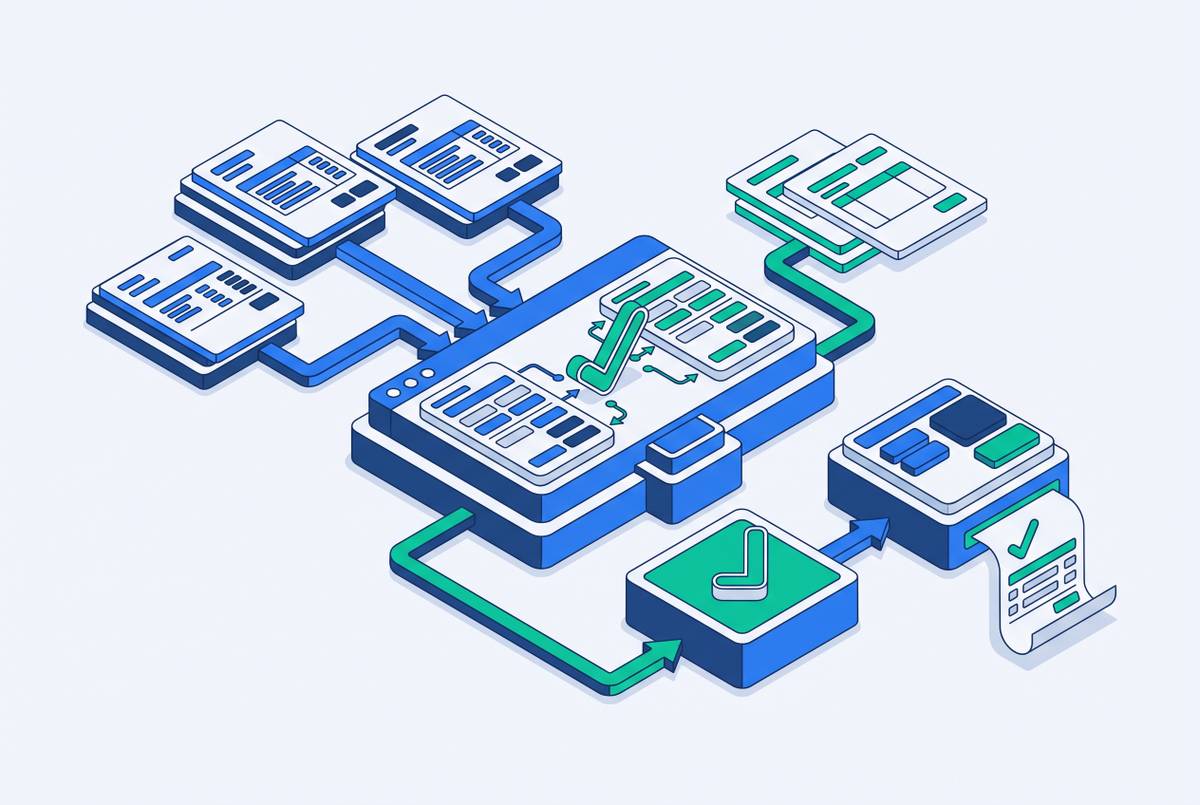
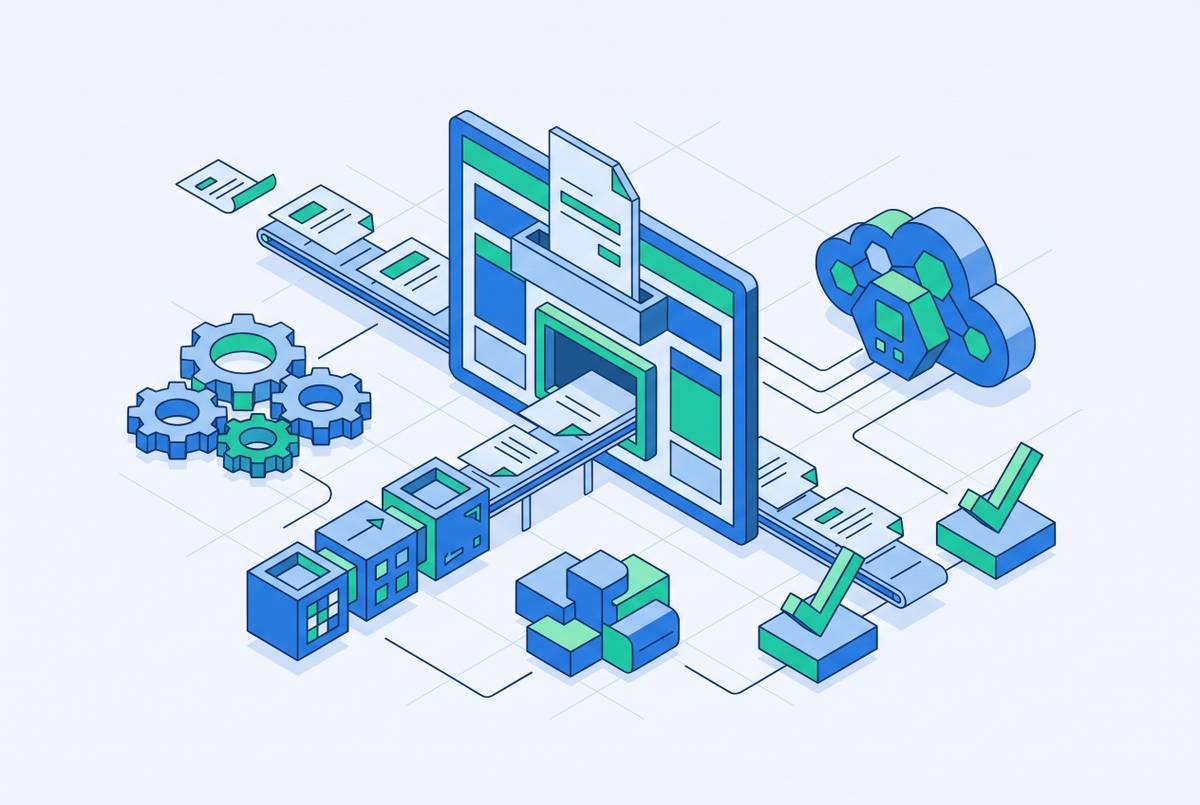
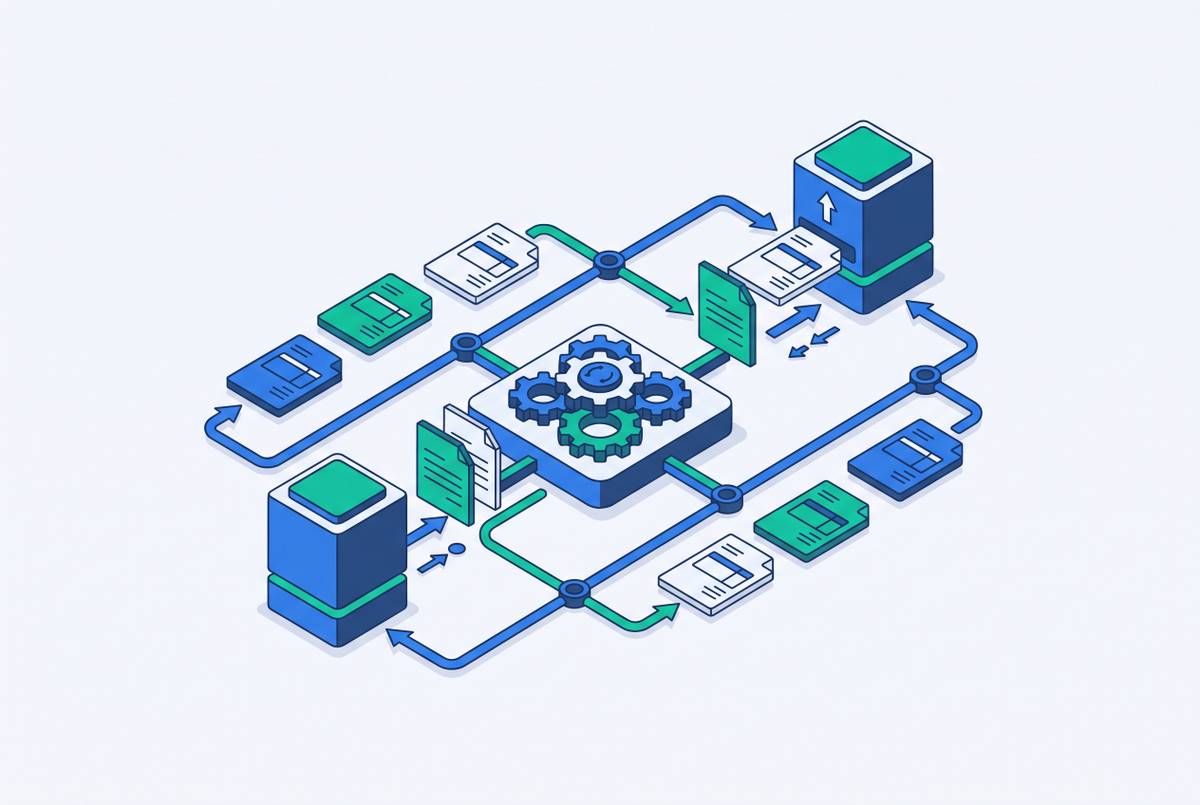
Native AP Portal Invoice Submission Providers Compared
Suppliers need maintained portal coverage and submission-to-approval tracking across all customers.
For small finance teams that want AR automation without an IT implementation project, Invoice Butler can connect their systems without engineering or middleware, while its Enterprise service submits invoices to customer portals and chases approval. These are distinct needs. This comparison of native AP portal invoice submission providers explains why suppliers should judge fit by maintained portal coverage, validation handling, and progress from submission to approval beyond upload confirmation.
Why suppliers — not buyers — bear the real cost of AP portal proliferation
A supplier managing several enterprise customers can have an invoice rejected on day two and discover the problem weeks later on an AR aging report. The report makes the customer look slow to pay, although the invoice never cleared the portal’s rules. Collections then starts with a reminder when the missing step is a correction. That delay compounds DSO while hiding the cause. The invoice has not become overdue so much as gone missing in the paperwork.
This happens because AP portals serve the buyer’s workflow first. The buyer gets an invoice ready for approval, while the supplier gets another login, another field map, and another set of validation rules. Each customer adds work that does not disappear because another customer uses a similar system. Automated follow-up that tracks promises to pay and portal rejections can bring those blockers to light before they get lost in the aging report. For services such as Invoice Butler, surfacing and resolving that friction is part of collections.
The distinction sets the terms of this comparison. A buyer needs a reliable place to receive invoices. A supplier needs a reliable way to get paid across all the places its buyers have chosen.
Why automating portal submission is structurally harder than it looks
Portal submission is a maintained collection of customer-specific mappings, any of which can change without notice. Authentication alone needs separate credentials and, more and more often, separate multi-factor requirements. Storing and rotating those credentials requires security design.
The mapping burden also grows with customer count. Two customers using the same portal can require different fields because each configures its own instance. A new required field or tighter format rule can therefore break a previously working submission. Automation must detect the failure, identify its cause, and route it for resolution. A connector with only portal-level knowledge has only building-level knowledge of a customer’s apartment.
Browser scripting, or RPA, can perform these steps in a demo. It becomes less dependable when a redesign breaks its selectors or multi-factor authentication interrupts the script. Reading status back from the portal creates another maintenance task, separate from uploading the invoice. Without that retrieval, the system cannot distinguish arrival from progress toward payment. Two useful measures follow from this complexity, namely portal coverage breadth and autonomous submission rate.
The three dimensions that actually separate providers are coverage, validation handling, and submission-to-approval reliability
The first question to bring to a vendor conversation concerns coverage. The useful count is distinct buyer portals supported through maintained customer-level mappings. Coverage should include the common enterprise portals and, where relevant, those used for contingent labor. Beyond those portals, the right fit depends on which customers the supplier serves. An uncovered portal leaves a manual workflow behind, weakening the case for consolidation.
A missing W-9, an incorrect PO format, and a non-compliant attachment are different failures requiring different responses. A provider should distinguish checks it can perform before submission from problems it discovers only after rejection. It should also explain who obtains a document the supplier does not yet have. Automation cannot conjure a PO reference the buyer never sent, however confidently the demo runs.
The third consideration is progress beyond upload. Autonomous submission rate means the share of portal invoices submitted without human intervention, so it gives a concrete measure of how much submission work remains with people. It is a useful proxy, with approval still to be verified. Status retrieval shows whether an invoice cleared validation, went into an approval queue, or moved toward payment. These three questions form a checklist for a conversation.
Enterprise source-to-pay suites include SAP Business Network and Coupa as the portals suppliers must navigate
SAP Business Network and Coupa are primarily the terrain suppliers must cross. SAP Business Network, also known as SAP Ariba, has broad international reach. Its commercial terms matter because SAP charges suppliers above a threshold a percentage of total transacted volume plus a tiered annual subscription fee. The transaction fee is capped per buyer relationship per year. For fee-sensitive suppliers, participation is therefore a commercial decision as well as an administrative task.
SAP launched next-gen SAP Ariba in March 2026 with a central launchpad that is simpler to use and built on a user-interface framework. SAP Ariba Intake Management, available around the world since late 2025, also aims to make the way in simpler. The practical effect on supplier adoption is still being assessed. A simpler entrance does not, by itself, answer how a supplier maintains mappings or follows an invoice through approval.
Coupa takes a different commercial approach, with no joining or transaction fees for core supplier portal access. It is ERP-neutral and includes AI-powered invoice capture, supplier self-service, three-way matching against POs and receipts, and dynamic discounting. Procurement, AP, expenses, and payments share one data model, connecting invoices to the buyer’s broader spending workflow. That helps explain the buyer’s choice, but suppliers still have to meet each customer’s requirements. Neither portal’s reach removes the need to track validation and approval across other customers’ systems.
Mid-market AP platforms with native supplier portals include Tipalti, AvidXchange, Yooz, and Stampli
Tipalti serves companies with large, geographically distributed supplier bases. Its own portal supports supplier self-onboarding, invoice submission, and payment method selection, while payments span currencies through ACH, wire, PayPal, and local methods. Its AI, Billy the Bot, handles invoice capture, GL coding, approval routing, duplicate detection, and PO matching. Built-in W-9/W-8 and 1099 tax compliance helps US-based teams that work with many vendors. These features let buyers receive, check, and approve invoices within Tipalti, but do not submit them across other buyers’ portals.
AvidXchange is particularly aligned with real estate, construction, and HOA/community association management. Its approach fits existing approval workflows without requiring a process redesign. That makes its relevant strength invoice processing and approval in the buyer’s environment. It should not be mistaken for a supplier-side service navigating every enterprise customer’s portal.
Yooz emphasizes invoice processing speed and volume-based pricing that includes unlimited users, workflows, and entities under one subscription. That structure matters to teams seeking scalable deployment without per-seat cost concerns. Yooz’s stated processing and pricing advantages leave its external buyer portal coverage and its ability to resolve a missing document in another buyer’s system unclear.
Stampli centers communication on the invoice and couples collaboration and approval workflows with ERP synchronization. Stampli describes pre-built integrations across a broad range of ERPs implemented in weeks without coding. That AP deployment claim is relevant to teams avoiding custom integration work. A supplier that uses one customer’s native portal still has to manage each other customer’s portal on its own.
ERP-embedded AP modules include Zone & Co for NetSuite and NetSuite's native AP
ERP-embedded tools keep AP inside the financial system of record. Zone & Co is built entirely within NetSuite, covering capture, coding, approval, payment, and reconciliation without third-party connectors. ZoneCapture uses OCR and AI to extract invoice data and post vendor bills, while ZoneApprovals supports configurable workflows including bulk and email-based approvals. ZoneReconcile matches transactions across bank accounts, credit cards, and payment providers. The constraint is equally clear, since Zone & Co is NetSuite-only rather than a solution for non-NetSuite or multiple-ERP environments.
NetSuite’s native AP module provides invoice processing, approval workflows, and payment runs within its cloud ERP. It fits organizations that do not have especially large numbers of invoices or complex global compliance requirements. Both are choices for teams working on their own AP, where removing the work of managing connectors helps. Neither is designed to manage supplier submissions into external customer portals.
Specialist portal submission tools and how to automate AR without waiting on an IT implementation project
A specialist submission tool sits between the supplier’s AR process and the buyer portals it must navigate. Instead of receiving invoices for a buyer, it submits them for a supplier. Its value comes from maintaining customer-level mappings across portals and updating them when validation rules change. The provider takes on the maintenance burden rather than leaving finance with a collection of browser scripts.
Invoice Butler operates in this supplier-side layer, submitting into portals including Coupa and Ariba and following up on rejections. Its work includes portal-specific requirements, missing W-9s, PO references, attachment formats, and status tracking through cash receipt. This illustrates why the category combines automation with persistent follow-up. Some exceptions need documents or human escalation. Reading approval status, rejection reasons, and payment timing back from the portal keeps that work in step with how far the invoice has moved toward payment.
Invoice Butler’s pricing page describes connections to QuickBooks, Stripe, Bill.com, and more without engineering, middleware, or a setup project. It places portal form filling, invoice uploads, and approval chasing in the Enterprise service. The connection claim should therefore not be read as a promise that every customer portal needs no configuration. The right fit still depends on which customer mappings are supported, who handles exceptions, the autonomous submission rate, and how much status retrieval shows.
How global e-invoicing mandates change the coverage calculus
Global e-invoicing mandates make coverage a compliance concern as well as a labor-saving one. Organizations that deferred AP automation face pressure to standardize invoice infrastructure that can meet portal and format requirements. For multinational suppliers, familiarity with common enterprise portals is therefore not enough. Coverage must extend to the portals and e-invoicing formats required in regulated markets.
Basware addresses this dimension through its supplier network and focus on global AP complexity. Basware describes onboarding services designed to reduce friction across large and diverse supplier bases, with no fees to join its e-invoicing network. Its relevance is strongest where tax, e-invoicing, and cross-border payment requirements complicate AP operations. That does not make network reach interchangeable with supplier-side submission coverage. A submission tool that works well with North American enterprise portals but supports few European e-invoicing formats meets only part of the needs of suppliers with European enterprise customers.
Choosing the right fit by matching provider type to the supplier's actual problem
The right choice starts with which side of the invoice the organization needs to fix. Enterprise source-to-pay suites such as SAP Business Network and Coupa fit buyers standardizing invoice receipt with procurement and IT resources to configure and maintain a portal. Mid-market platforms such as Tipalti, AvidXchange, Yooz, and Stampli fit buyers improving internal invoice approval and payment workflows. ERP-embedded options fit NetSuite organizations that want AP inside their financial system without third-party connectors. None of those needs is the same as getting supplier invoices accepted across many customer portals.
A specialist submission layer, including Invoice Butler, fits that cross-portal problem when silent rejections and uncollected cash cost more than a dedicated service. Choosing a category depends on which one owns the work currently stopping payment. That returns the comparison to the invoice rejected on day two and misread weeks later as a slow-paying customer.
Before committing, ask three practical questions. Ask how many distinct customer portals have maintained customer-level mappings and how the provider handles unannounced validation changes. Ask who identifies a rejection, obtains missing documents, and resolves the exception, and how quickly that happens. Finally, ask for the autonomous submission rate and a demonstration of status retrieval beyond upload confirmation. The useful finish line is not a file inside a portal, but an invoice progressing toward payment.