Reducing Finance Team Burnout from Collections Work
Fixing collections burnout requires redesigning broken processes, not just hiring more people.

Someone re-enters the same balance into three different spreadsheets because the system of record doesn't talk to the reporting tool. None of this is rare.
The easy explanation is that the team is just stretched too thin. Add people, the thinking goes, or ask everyone to grind a little harder; the backlog is expected to clear. Burnout in AR and collections comes from how the work gets organized, regardless of the sheer amount of it or how much effort people pour in. A team drowning in a broken process will still be drowning with more people, just with more people treading water. The volume was never the disease. It was the symptom everyone could see, which made it the easiest thing to blame.
Leaders who treat burnout as a staffing shortfall respond by hiring or approving overtime. Leaders who recognize it as a structural problem respond by redesigning the process itself and automating the right pieces of it. Only the second response gets at the actual cause. That difference also explains a pattern that confuses a lot of finance leaders: headcount goes up, and burnout doesn't go down. If the process is fragile, every new hire just inherits the same broken handoffs, the same unclear ownership, the same scramble. You don't fix a leaky roof by adding more buckets.
The three structural mechanisms that produce AR burnout
Collections burnout is three separate structural patterns, and lumping them together is how companies end up fixing the wrong problem. Knowing which mechanism (or combination) is actually running the show at a given company changes what the fix should look like.
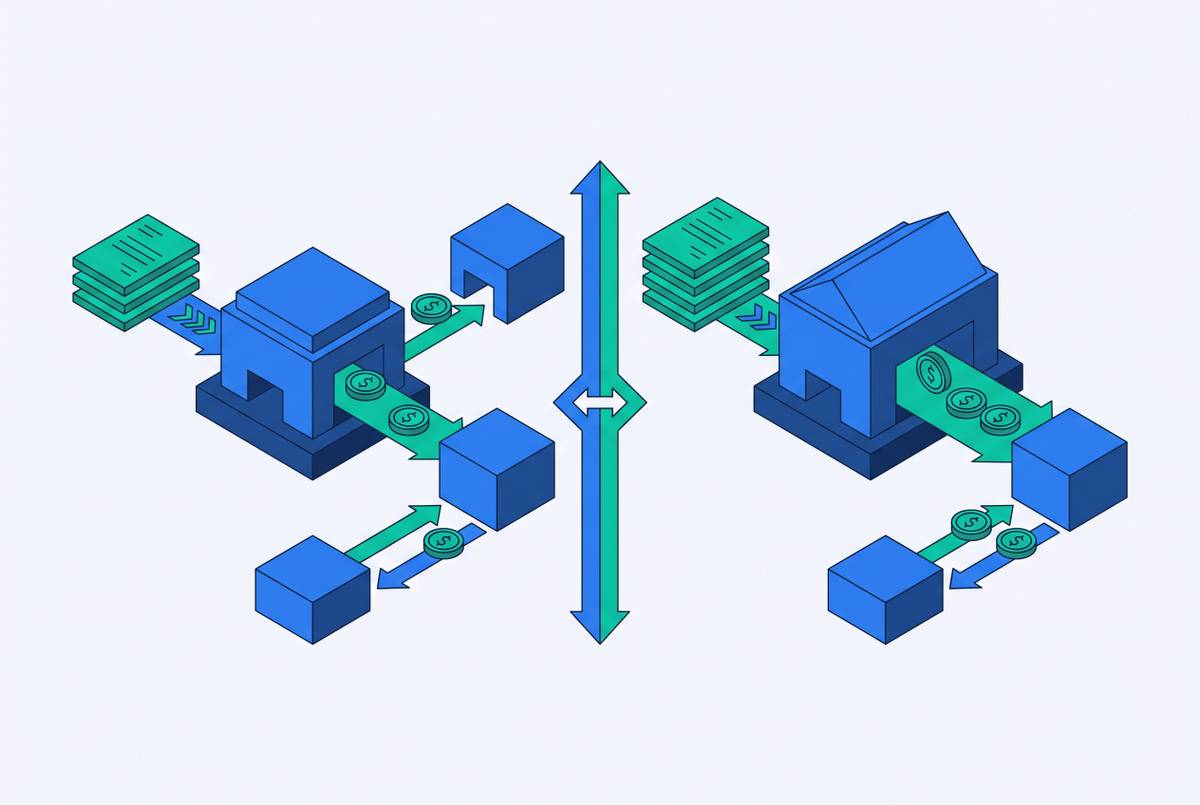
The first is volume without prioritization. QX Global's 2026 AR services guide states that collections complexity rises faster than team capacity. Growth brings more invoices, more customers, more edge cases, and without something to reinforce the process, follow-up gets inconsistent and cash slows down even when the sales numbers look great. The practical result is a team that's perpetually behind on something important, because in a flat inbox, every invoice looks equally urgent or equally easy to put off. There's no triage.
The second is dispute and exception ownership gaps. A missing backup document bounces between two teams who each think the other owns it. An approval sits in somebody's inbox for four days because nobody's job description says "chase approvals." These are not rare edge cases at a mid-market company handling real invoice volume; they are the daily texture of the work.
The third is the partial-automation trap. Most finance leaders report their processes are only partially automated. They're still leaning on inconsistent OCR tools and still need a person to step in whenever something doesn't match. Picture buying a dishwasher that only cleans the top rack. You still have to wash the bottom rack by hand, except now you also have to remember to run the dishwasher first. That's the partial-automation trap in a sentence.
AR and the sharpest end of the finance burnout problem
Every structural pressure in finance seems to collide inside AR at the same time. That's why the function burns people out faster and more visibly than the rest of the department. Process fragility, talent attrition, and cash pressure don't just happen to AR separately. They land on the same desks, in the same week, often in the same conversation.
Start with the people leaving. Among finance functions where CFOs report a talent crunch, AR ranks third, behind accounting broadly and FP&A. That means the function is losing people fast enough to make its own process problems worse, not just stay flat. And the exodus isn't a pipeline problem where companies can't find candidates. Work-life balance, burnout, and low-value repetitive work are the top reasons finance professionals give for leaving a company, or leaving the industry altogether, and collections work manages to pack all three into a single job description.
The cost of that burnout mostly is invisible to standard metrics. Presenteeism, meaning employees who keep working while too exhausted to perform anywhere near full capacity, makes up most of total burnout costs. It won't appear in an absenteeism report or a headcount spreadsheet. It appears later, in errors, in a DSO number that creeps upward, in missed escalations. By the time leadership notices, the damage already happened weeks earlier.
Losing AR talent carries a cost beyond slower collections. It strips finance of the cash-flow visibility and forecasting ability that leadership increasingly depends on, because the people who understood which customers pay late every quarter, which disputes are predictable, and which accounts need a phone call instead of an email, those people are gone. That institutional memory doesn't transfer with a handoff document.
And 2026 isn't making any of this easier. Customers are taking longer to pay, and they're more willing to dispute or delay a payment than they used to be, which drives up the labor required per invoice even though team capacity hasn't moved. Same headcount, same hours in the day, more friction per dollar collected. The math isn't working.
What automation alone gets wrong about the burnout problem
The standard answer to all of this is "automate the collections process," and it's incomplete. Technology only reduces burnout when it actually eliminates work, not when it just moves that work into a different interface. Some tools, such as Invoice Butler, an AI-powered accounts receivable software that automates invoice follow-ups across email, phone, and SMS while pairing those agents with human collections experts, are built to handle both the volume and the exceptions that typically fall through. Buying a platform without redesigning the process it runs on means the team is doing the same tasks, just with new screens to click through.
There's a quieter problem too. When automation handles volume but not exceptions, the work that's left over gets harder, not easier. It's more complex, more ambiguous, more likely to involve an actual dispute, and the team handling it was never trained for that harder tier of work. The burden doesn't lift; it moves to a smaller group of people handling a more concentrated dose of difficulty.
Then there's the governance risk, and this one deserves real attention. In a manual workflow, contacting the wrong customer at the wrong time through the wrong channel is a single mistake, one person, one email, fixable with an apology. In an automated workflow, that same mistake can run at scale before anyone catches it. Automation doesn't just scale recoveries. It scales errors just as fast, with none of the natural friction that slows a human down before they hit send on the fifth angry email in a row.
Collections work also has to hold two things in tension at once: get the cash in, and don't torch the relationship doing it. An automated dunning sequence that fires off at the wrong moment, or reads as cold and robotic, can push away an account that a human phone call would have saved. Emagia's 2026 AR automation trends analysis notes that automated AR systems, done well, actually support timely communication, accurate billing, and quicker dispute resolution, which helps customer satisfaction rather than hurting it. The outcome depends on how the system is built and timed, regardless of whether automation exists.
The biggest obstacles to making any of this work are skills gaps on the team, systems that don't talk to each other, automation applied in the wrong places, and a lack of buy-in from the people who have to actually use the thing day to day. None of those get solved by signing another software contract.
Even fully autonomous AR systems still need a human for exception handling, dispute resolution, and the kind of relationship judgment that no model fully replicates. The Credit Research Foundation's Q1 2026 industry publication gave this emerging function a name: the "AI Receivables Strategist," a role sitting at the intersection of finance, data, and enterprise systems. That title exists precisely because the governance and strategy layer of AR can't be automated out of existence. Somebody still has to own the judgment calls.
Evidence from deployed systems on where automation works
None of this means automation is a dead end. When it's built on accurate data and paired with clear ownership of the process, automation produces real, measurable relief from the specific mechanisms driving burnout.
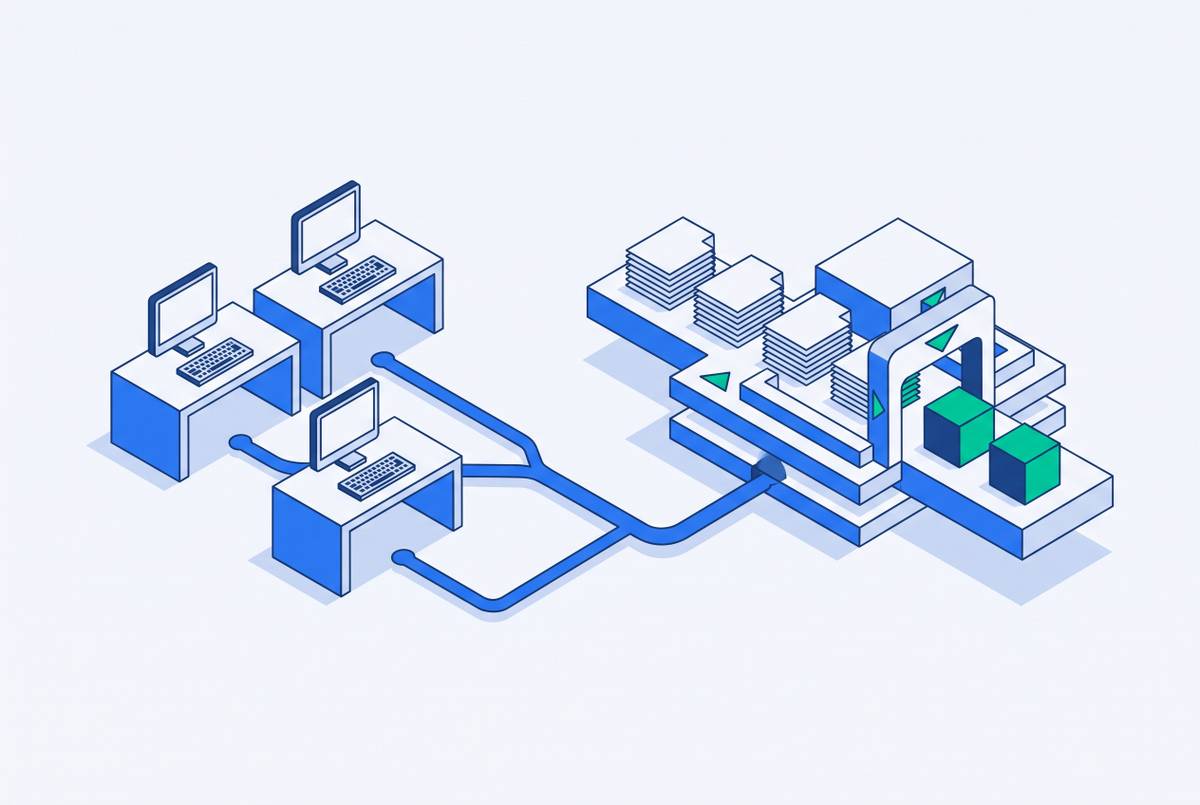
The deciding factor is almost always what's happening upstream of the AR tool itself. Zenskar's 2026 AR software comparison makes this point well: a standalone AR tool sitting downstream of a billing system it doesn't control ends up automating collections on top of bad data. When a customer short-pays because the invoice didn't match the contract terms, the AR tool can chase that mismatch forever, but it can't fix the root cause, because the root cause lives somewhere else entirely. A system that generates the invoice straight from the signed contract, and runs collections off that same record, eliminates that entire category of dispute before it starts. Garbage in, garbage out is the whole explanation for why some AR automation projects deliver and others quietly stall.
The outcomes where this works are concrete. Quadient AR (YayPay), a mid-market B2B platform, reports customers achieving a 50% reduction in manual AR tasks and a meaningful cut in average DSO, with finance leaders saying they've been able to avoid adding AR headcount even as their invoice volume kept climbing. The relief comes from cutting out manual tracking, reminder drafting, and reconciliation by hand, which frees analysts to spend their time on actual disputes and strategic work instead.
Chargebee's customer data tells a similarly concrete story. One named customer cut unpaid invoices by a large margin while growing the business substantially, and after rolling out the system, spent no more than one to two hours a week on accounts receivable. That number, one to two hours a week, is the burnout-relevant detail here, measuring how little of a person's week collections now eats, not the dollar amount recovered.
Symend takes a different angle. It's an AI-driven behavioral science platform that plugs into existing collections infrastructure, CRMs, risk models, dialer files, core banking systems, and nudges customers toward resolving their own balance without a collector ever picking up the phone. That's a direct hit on the volume-without-prioritization mechanism, addressed right at the source instead of downstream.
The common thread across every one of these cases is that relief comes from closing one specific gap, whether that's invoice accuracy, follow-up cadence, or giving customers a way to self-serve. Emagia's 2026 AR automation trends material frames the CFO-level version of this: autonomous cash posting, dispute resolution, and invoice matching reduce DSO and speed up liquidity, but those gains only materialize when the system is properly integrated with ERP and CRM, so AR data moves accurately across finance and sales instead of sitting isolated in its own tool.
Outsourcing AR execution versus internal automation for reducing burnout
Automation isn't the only lever here, and it's not always the right first one. When the real bottleneck is execution capacity rather than the technology itself, outsourcing the execution layer of collections can relieve burnout faster than any internal rollout, as long as strategic ownership stays in-house.
Healthcare offers the clearest large-scale proof of this. The 2026 Guidehouse and HFMA Revenue Cycle Trends report found that AR follow-up and collections is the most commonly outsourced revenue cycle function among health systems, notable because this is a sector dealing with enormous invoice volume, genuinely complicated payer rules, and some of the sharpest AR pressure anywhere in the economy.
Integrative Systems' client case makes the underlying shift visible. A named client cut DSO meaningfully in under three months and saw a meaningful jump in collections, and the internal team got redirected toward scaling the business instead of chasing invoices. The DSO improvement is the headline number. What actually matters for burnout is the redirection itself: the internal team stopped doing execution work and started doing strategy work. That's the shift that actually relieves burnout, moving people from the treadmill into the room where decisions get made.
The design principle that keeps this from creating new problems is simple to state and easy to skip. Strategic finance ownership, treasury strategy, board reporting, final forecasts, compliance calls, needs to stay internal even when the day-to-day operational workflow gets outsourced. Outsourcing the execution of collections is not the same as outsourcing the judgment behind it, and companies that blur that line end up outsourcing decisions they were never trying to hand off in the first place.