Automated Cash Application in Modern AR
Matching payments to invoices costs companies thousands in labor that automation can eliminate.
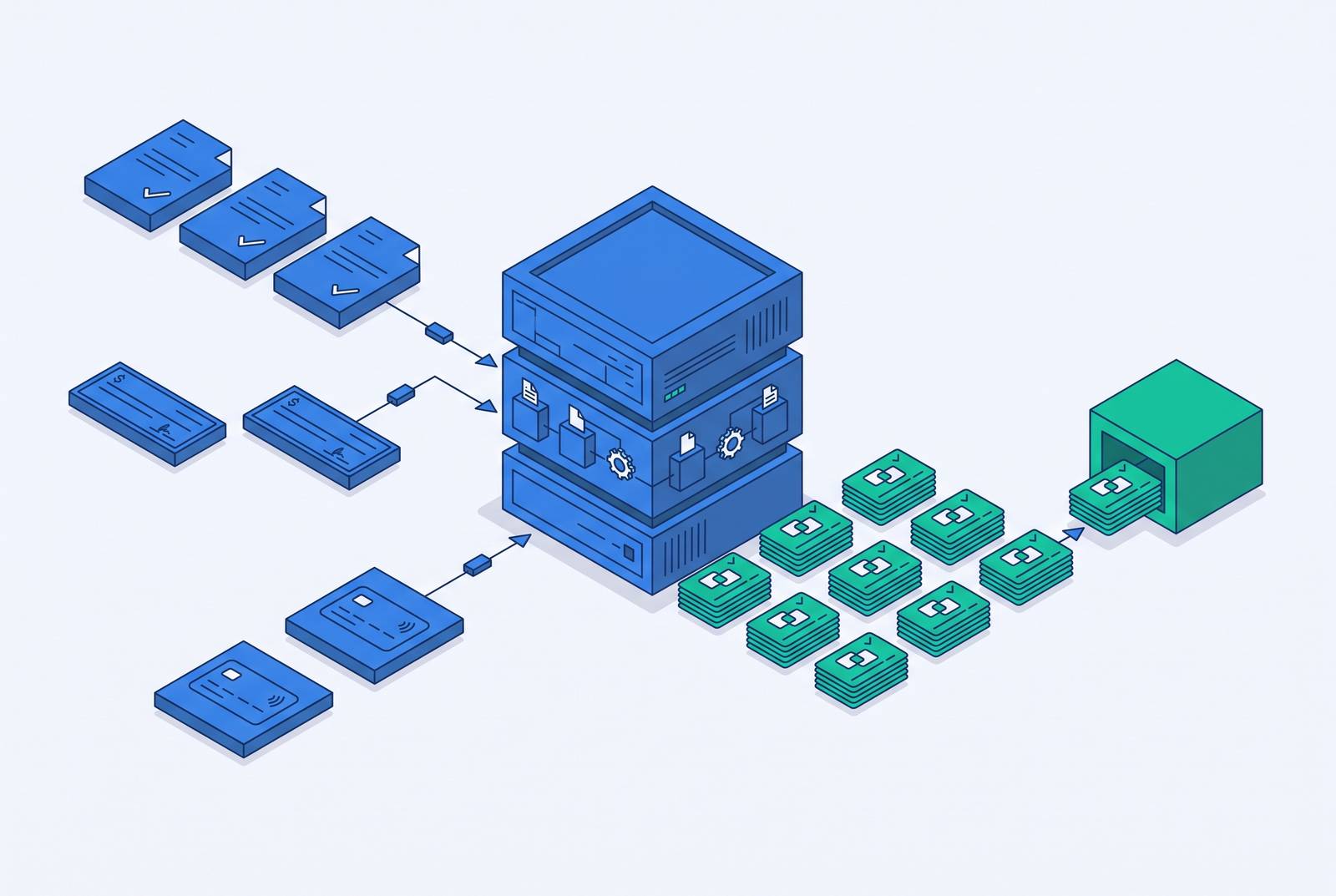
Cash application is not collections. It sits between collections and dunning, and it is the step that breaks everything else when it goes wrong.
Specifically, it is the process of matching a payment that has arrived to the open invoice it is supposed to close, then posting that match into the ERP so the customer's account is cleared.
The sequence looks like this:
- Invoice goes out
- Payment arrives
- Cash application matches payment to invoice
- AR is updated
- Customer account is cleared
That third step is the one that matters. And it is the one that gets messy.
Payments arrive in a lot of different ways. Checks. ACH. Wire transfers. EFTs. Each one carries remittance data differently, and some carry no remittance data at all. A check might have an invoice number in the memo line. A wire will arrive with a reference code that means something to the payer and nothing to your system. An ACH will cite a purchase order from three months ago that your team has to go dig up.
The process is largely invisible when it works. Nobody sends a congratulatory email when payments post on time. But when it fails, the downstream consequences show up fast: DSO inflates, disputes pile up, and collections teams start chasing balances that were actually paid. The payment existed. The reconciliation just never happened. It is like a library that keeps sending overdue notices for books that were returned weeks ago — the books are on the shelf, but nobody checked them back in.
The Real Cost of Doing This Manually at Any Meaningful Scale
A Forrester study found that a representative organization spends 16 hours every single day posting cash manually. Roughly $88,660 per year in labor costs, just for posting. Not analyzing anything. Just resolving disputes. Just matching numbers to other numbers, by hand, every day.
And that is just the posting. Total manual cash application inefficiencies for that same company come out to around $212,049 annually. The rest is exception handling, rework, and the downstream cost of errors that nobody caught until three weeks later.
AR departments that have not automated cash application spend somewhere between 30% and 50% of their total AR labor hours on payment matching and exception resolution. None of that generates strategic value. It is overhead that has learned to dress like operations.
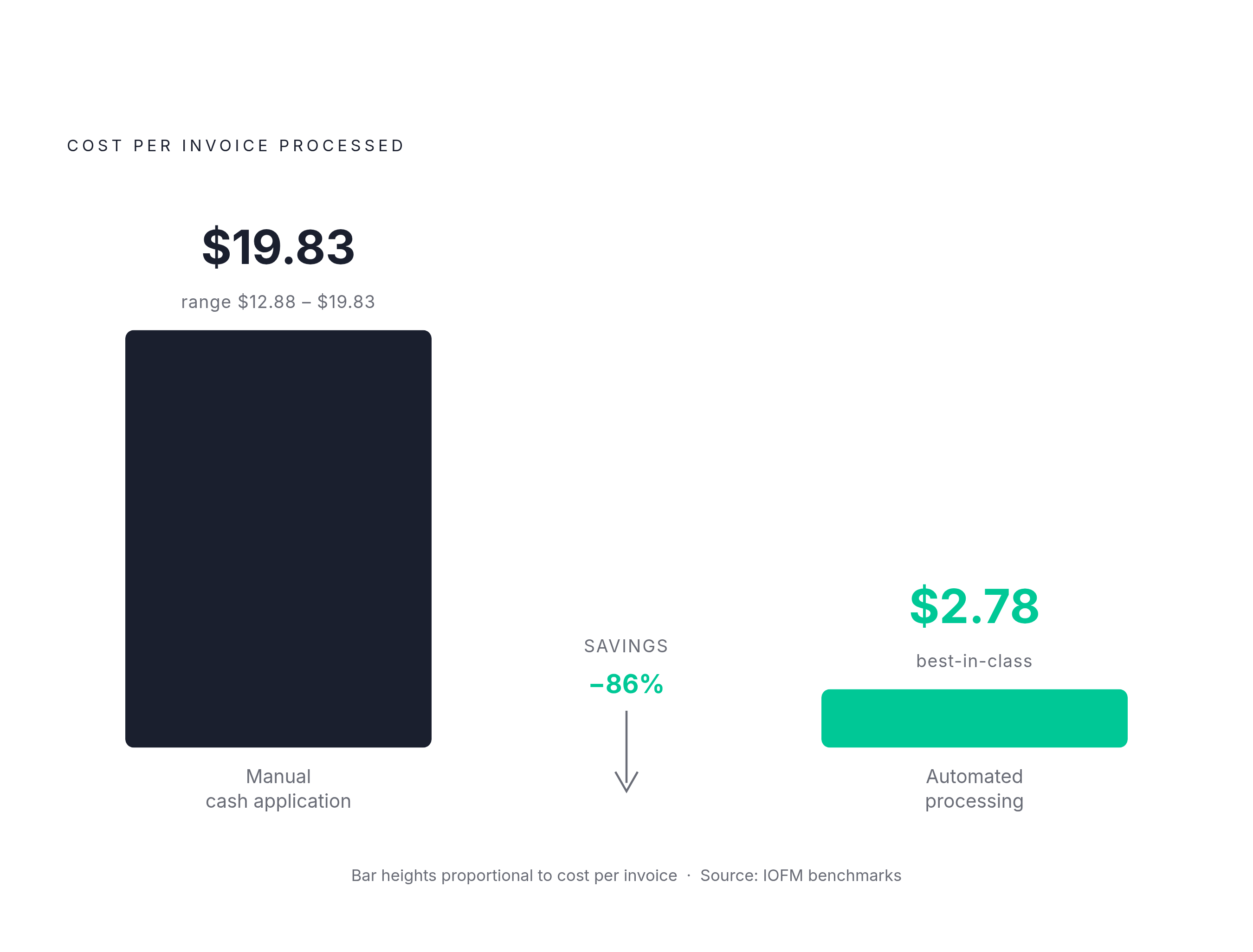
The per-invoice math is just as rough. In 2025, manual invoice processing runs between $12.88 and $19.83 per invoice depending on company size. Best-in-class automated processing drops that to $2.78. That spread compounds across every invoice your team touches, all year.
Every hour an AR analyst spends on routine matching is an hour not spent on deductions, disputes, and the accounts that actually need a human paying attention to them. Across the U.S. economy, companies are carrying $1.7 trillion in excess working capital. Slow payers are part of that story. Slow posting is the other half, and it is the half you actually control. Why did the AR team break up with manual processing? Because it had too many outstanding issues.
How Automated Cash Application Works Step by Step
Automated cash application is a set of steps that happen to be very fast and, increasingly, very smart. Here is what the process actually looks like.
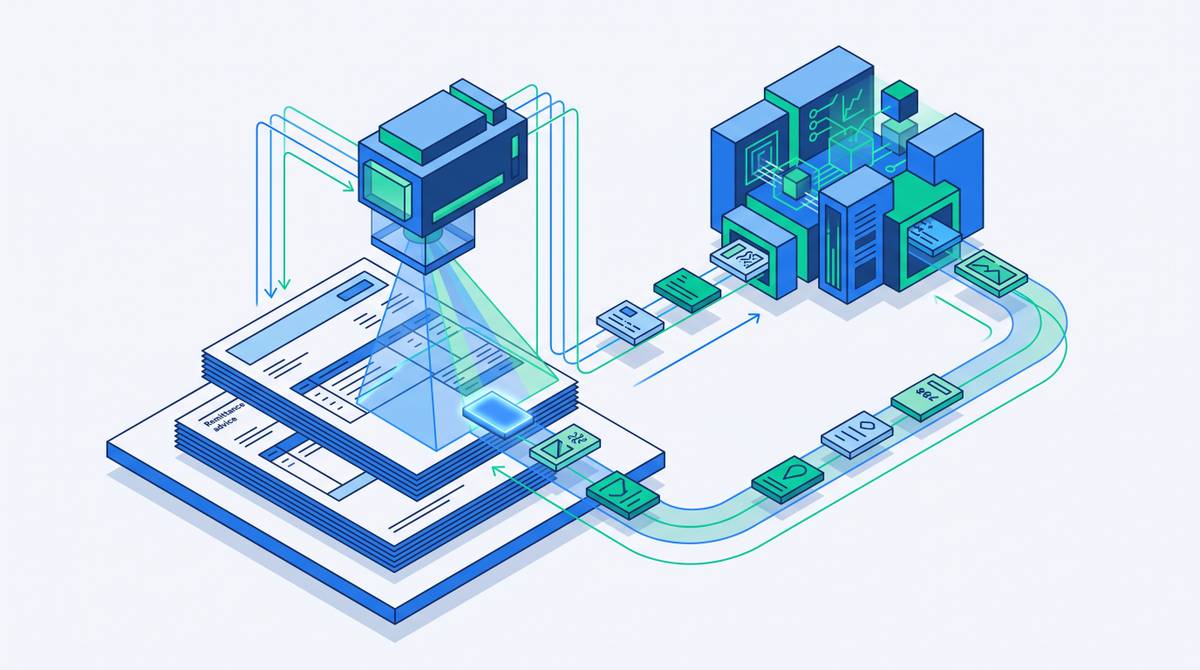
Payment capture. Payments arrive through whatever channel they arrive through. OCR and intelligent document processing tools extract remittance data automatically, even from unstructured formats. PDF attachments. Email bodies. Portal downloads. The system reads and pulls the relevant data before a human ever sees it.
Matching. This is where the actual work happens. AI-powered platforms match incoming payments to open invoices. They handle partial payments. They handle short pays. They handle bundled wires where one payment is supposed to cover 47 different invoices from the last billing cycle. Matching logic that would take a human several hours to untangle runs in milliseconds.
Exception flagging. Some payments fail to match cleanly. When something fails, the system flags it and routes it into a prioritized queue based on dollar value, customer tier, or invoice age. The reviewer sees the most important exceptions first, not just whatever landed at the top of the pile.
ERP posting. Matched payments post automatically. AR updates in real time. No manual entry. No export-import shuffle between systems.
The technology behind this includes OCR and intelligent document processing for extracting remittance data from whatever format it arrived in, machine learning for the matching logic (which improves over time as it learns each customer's payment patterns), natural language processing for interpreting unstructured remittance text buried in email bodies or reference fields, and robotic process automation for ERP integration and posting.
Every matched payment trains the model. It captures the bank account identifier. It learns that a particular customer always bundles invoices into one wire on the 15th. It figures out that a subsidiary pays under a slightly different name than what lives in your customer master. Each successful match makes the next one more likely to post automatically.
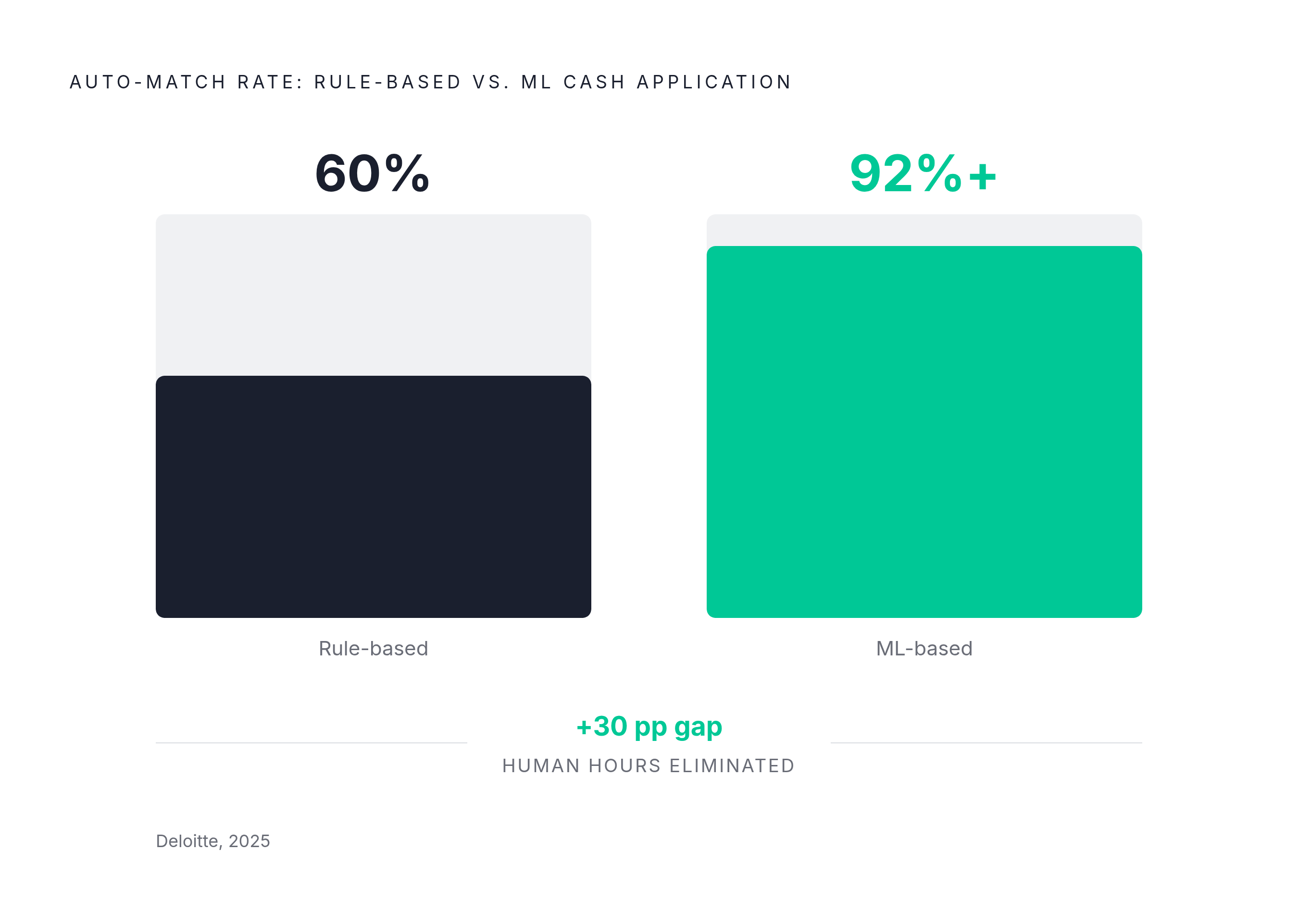
The distinction between rule-based and AI-based systems matters more than most people realize. Rule-based systems require manual updates every time something changes. When a customer redesigns their remittance layout, the rule breaks. Someone has to go fix it by hand. ML-based systems adapt without reconfiguration. A 2025 Deloitte report found that ML-based cash application achieved auto-match rates above 90%, compared to roughly 60% with traditional rule-based automation. That gap represents a lot of human hours.
The most recent evolution worth understanding is agentic AI. These are systems that go beyond matching clean transactions. Agents that read remittance advice, decode payer names that do not match the customer master, draft outreach to retrieve missing remittance information, and post matched payments without human review. Straight-through processing rates above 90% are achievable in production environments, based on platform deployment data from the first half of 2026. The shift is from automation that handles easy transactions to agents that handle hard ones.
Where Automated Cash Application Still Breaks Down
Most companies running automated cash application land somewhere between a 60% and 80% STP rate. That gap between 75% and 95% is where human time quietly disappears every day, and the failure modes are chronic and predictable.
Missing remittance data. Payment arrives with no invoice reference, no purchase order number, nothing to match against. The cash sits there. The invoice stays open.
Payer name mismatches. Your customer master has "Acme Corp." The payment came from "Acme Holdings LLC" because an acquired subsidiary cuts its own checks and nobody updated anything anywhere.
Partial payments and unapplied cash. A short pay requires deduction research before anyone can post it. The invoice stays open while the cash ages.
Procurement portal friction. Payments routed through platforms like Coupa or Ariba often lose their remittance context in transit. The portal processes the payment but strips the data that makes it matchable.
Missing documents. W-9s, purchase orders, or other required documents hold up posting even after the cash has already arrived.
Even at a 90% match rate, a high-volume AR operation still generates hundreds of exceptions every single day. The remaining share is a real, recurring workload, not a rounding error.
Rule-based systems are especially brittle here. A single customer changing their remittance format can quietly collapse a matching rule that worked perfectly for two years. And there is a deeper problem that no matching engine solves on its own: operational blockers like missing documents, portal navigation, and customer communication gaps require persistent follow-up. Automation handles the reconciliation. It does not chase down the W-9 that has been sitting in someone's inbox for three weeks.
Teams with historically messy data also face a longer runway to high STP rates. Machine learning systems need clean, accurate records to train on. If your customer master is full of duplicates and outdated entries, the model starts from a weaker position, and you will feel it.
The Metrics That Tell You Whether Your Cash Application Is Working
Straight-through processing rate. STP rate is the percentage of payments matched and posted without any human intervention. It is the most direct measure of whether your cash application process is doing its job.
Most mid-market AR teams live in the 60–80% STP range. Top performers using AI-driven platforms reach 90% or higher. Billtrust clients achieved an average online match rate of 93.76% in 2025, which gives you a useful real-world benchmark. At 95–99% STP, the routine posting function effectively disappears. AR analysts shift to exception queues entirely.
DSO as the downstream signal. Days Sales Outstanding is the lagging indicator. STP rate is the leading one. If your STP rate is improving, DSO should follow. Automating AR has been shown to reduce DSO by an average of 35% without adding headcount. One set of vendor-reported customer results showed a 37% average DSO reduction, with AR analysts redeployed from data entry into disputes and strategic account management.
Exception resolution time. How long does it take your team to work through an exception? This is a useful proxy for how well the system handles edge cases and routes work to the right people. AI-assisted exception routing compresses this by surfacing the highest-priority items first, rather than dumping everything into a flat queue.
Cost per invoice processed. This metric is often missing entirely from how AR teams evaluate themselves. Given the spread between manual processing costs and best-in-class automated processing, it is one of the most consequential numbers in the entire AR operation. If you are not tracking it, you do not actually know what your process costs.
What It Actually Takes to Get from Manual to High-STP Cash Application
High STP rates do not just happen because you bought software. A lot of teams find this out about six months after go-live, when the numbers are not moving and everyone is trying to figure out why.
Start with data quality, not tooling. The matching engine is only as good as the customer master it trains on. Teams that invest in cleaning their customer records, payment history, and bank account identifiers before implementation reach high STP rates faster and with fewer surprises. It is tedious work. It is also non-negotiable, and skipping it just means doing it later, under pressure, with more urgency than anyone wanted.
Treat remittance enrichment as a prerequisite. For payments that arrive without remittance data (and many will), the system needs a way to go get it. That means portal integrations, customer communication workflows, or outbound remittance requests built into the upstream process. Enrichment does not happen automatically. It needs to be designed into the workflow before go-live, not patched in three months later.
The portal problem is operational, not technical. Payments flowing through procurement portals like Coupa or Ariba strip remittance context in transit. Retrieving that context means navigating those portals, either with a human or an agent. Teams that treat this as a purely technical problem keep running into the same wall. It is a workflow design challenge, and it needs to be owned by someone with actual operational authority.
Exception handling needs a clear owner. Automation moves the work from routine posting to exception resolution. That is the whole point. But if the exception queue does not have a defined owner with clear accountability, the efficiency gains get quietly eaten by unresolved holds. The queue does not manage itself.
Watch out for the rule-based trap. A lot of teams have spent real money configuring rule-based matching systems and have a natural resistance to layering AI on top of it. The configuration feels like control. But the evidence from platform deployments is consistent: ML-based systems outperform rigid rules, especially as customer payment behavior drifts over time. Rules that worked in 2022 are increasingly wrong in 2025.
ERP integration depth is not optional. Real-time AR updates require the cash application layer to write directly back to the ERP without a human in the loop. Shallow integrations that still require manual export and import steps eliminate most of the STP gain. If the last mile still requires someone to move data by hand, you have automated part of cash application and left the rest sitting there at the end of the day.
Compliance timelines are accelerating the decision. Mandatory e-invoicing rules are now active in more than 80 jurisdictions globally. For companies operating across multiple countries, this is not a future consideration. Those regulations are pulling finance teams toward API-driven cash application whether they planned for it or not.
The goal is not fewer AR employees. The goal is different work. When routine posting becomes automatic, AR analysts can spend their time on deductions, disputes, and the accounts that actually require judgment and relationship management. Getting to high-STP cash application is achievable, but it requires treating it like the operational transformation it actually is.