Why Modern AR Automation Requires Zero IT Handoff to Go Live
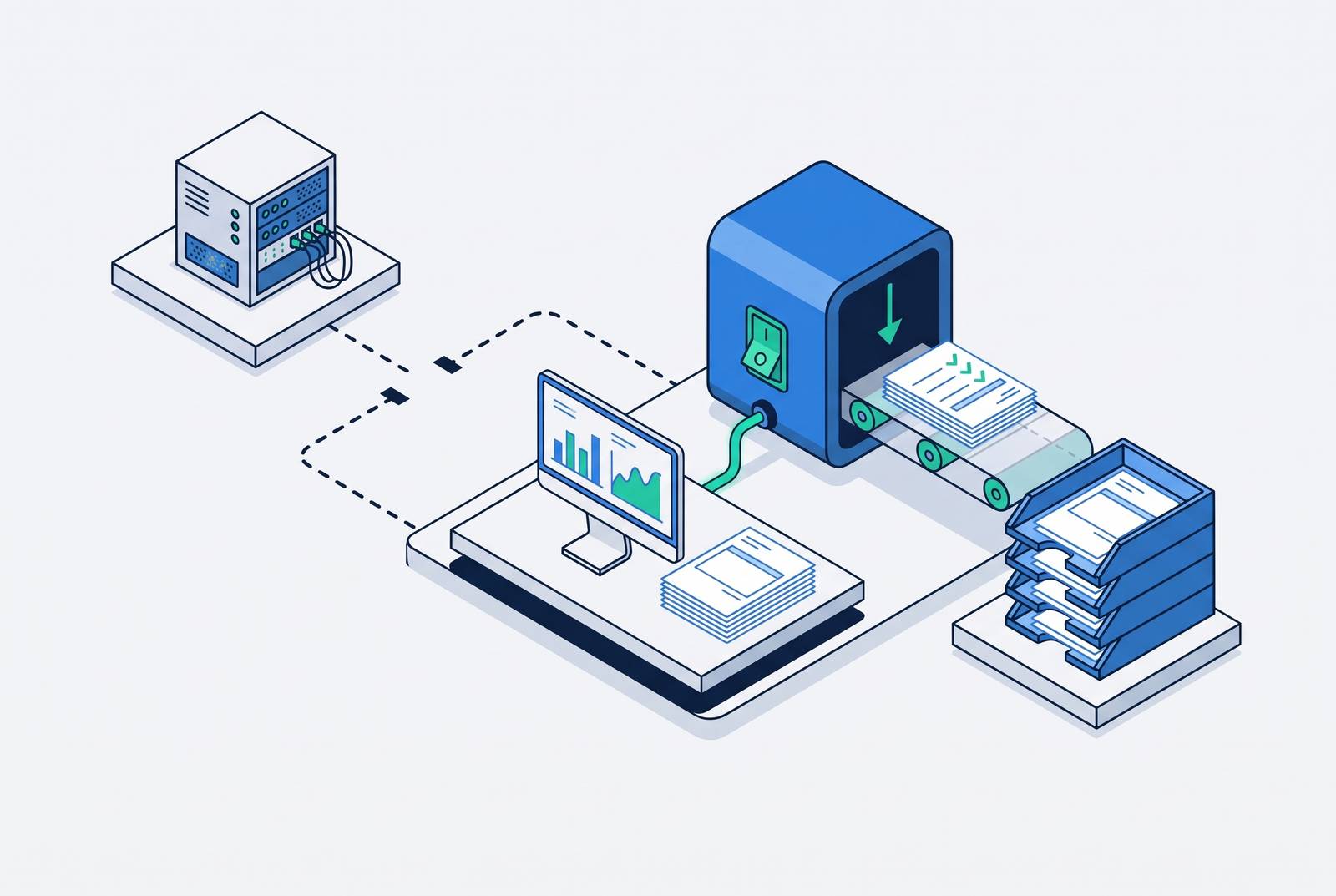
Small finance teams can set up modern accounts receivable automation without an IT implementation project when the platform has a connector that is kept up to date for their standard cloud ERP, template-free remittance processing, and workflow controls that finance owns. Zero IT handoff” lets finance retain ownership of go-live without waiting in a development queue. Security and access checks may still need IT, but they should be bounded tasks.
Why most AR automation projects stall before a single invoice is touched
AR automation gets talked about a lot, but the brief shows that most firms have yet to reach full automation. Quadient’s 2026 AR guide treats automating the full invoice-to-cash cycle as a baseline expectation for reducing days sales outstanding, or DSO, and eliminating manual work. Yet choosing capable software does not mean a finance team can start using it.
Finance approves the project and selects a vendor, then hands the implementation to IT for ERP integration. The work enters a different queue, with different priorities and a different definition of done. Months of field mapping, connector development, and security reviews can follow before the new system touches an invoice.
How traditional ERP integration turns a finance initiative into an IT project
The handoff follows from the architecture. Older ERP systems may offer batch exports rather than live APIs, so an automation platform has no up-to-date invoice and payment status. The platform must either wait for updates at set times or connect through a custom integration. Neither option becomes simpler because the finance director has an urgent deadline.
Developers must make fields and data structures line up, including where they differ across entities, while security teams check how the connection will work. A finance team can explain what an invoice status means, but that does not give it control over the code needed to move that status between systems.
User acceptance testing can uncover connector problems after finance has already agreed to go-live. The choice then becomes launching with a broken connection or missing the deadline. Better project management may make that risk visible earlier, but it cannot remove the underlying need for custom engineering.
What finance teams lose every week the deployment drags
While integration work continues, the AR team still chases invoices, re-keys remittance data, and manages dunning sequences by hand. The labor cost of the old process runs beside the investment in its replacement. Each new batch of invoices adds more work to a process the business has already decided to retire.
The cash cost is harder to ignore. Quadient’s guide notes that, for a company with substantial annual revenue, each additional day of DSO can tie up hundreds of thousands of dollars. A delayed deployment postpones the chance to shorten the collection cycle, leaving cash tied up while the existing process continues.
That delay also reaches the month-end close. Reconciling information across systems that are not yet connected adds friction to reporting the CFO must rely on. McKinsey’s January 2025 analysis found that optimizing accounts payable and receivable procedures can significantly improve those balances within weeks. That establishes the opportunity cost. A month spent waiting for integration is a month in which those process improvements have not begun.
Three architectural shifts that made IT-free AR go-live achievable
With pre-built native ERP connectors, there is no need to pay someone to build the connection from scratch. A native connector is a vendor-maintained integration for a specific ERP, rather than a generic adapter that still needs substantial assembly. With standard configurations, finance can lead the setup while IT checks API credentials and reviews security requirements. Standard operations after launch do not require IT to maintain the connection.
The second shift removes remittance templates from setup. Legacy cash-application tools needed a human-configured template for each format, and a customer’s format change could break that work. Modern AI-native platforms use vision language models to read remittances without template configuration, so there are no templates to set up. Persistent memory can improve match rates over the first months without repeated reconfiguration. The system can learn instead of sending finance back to the drawing board.
No-code workflow configuration removes a different kind of dependency. Finance staff can set dunning cadences, escalation rules, risk thresholds, and workflow logic directly, rather than translating every change into a development request. Quadient’s guide identifies fast deployment and integration as a selection criterion and says modernization should not require replacing core ERP systems. These tools matured together in 2025–2026, so it became practical for finance to lead deployment. Their value lasts beyond onboarding because a workflow change need not become an IT ticket with a birthday.
What fast deployment actually looks like: concrete cases from production AR teams
Clorox automated 80% of its cash posting through an integrated cash-application setup built for high invoice volumes. Connecting the two systems delivered operational scale by enabling automation to take on a substantial share of posting work. That is the outcome a deployment timeline should serve.
Cintas saved over a million dollars annually by integrating AR automation with its ERP, releasing capacity equivalent to the productivity of 14 full-time staff. The return comes from work the connected system enables, rather than from reaching a launch milestone on a project plan.
Neither case, as described, establishes a deployment duration or proves that IT was absent. They illustrate the operational payoff. That distinction matters when weighing a fast-setup claim, especially for a small finance team with little time to take on the work of implementation. A strong automation outcome is relevant evidence, but it cannot substitute for evidence about how a comparable team got there.
The honest limits of zero IT handoff: where fast deployment breaks down
Standard cloud ERP configurations are the strongest fit for finance-led deployment. Heavily customized on-premise systems are a different proposition because native connectors work against standard data schemas. Custom fields, approval workflows, and multi-entity consolidation logic can add a lot of integration work that IT must own. A pre-built connector is not a skeleton key.
Speed also has to be weighed against integration depth. A system that launches in four weeks but syncs invoices only once a day is not equivalent to one providing real-time status. Shallow integration is a major reason automation underdelivers, even when the launch itself looks successful. A quick start is useful only if the connection supports the work finance needs to do.
Even the fastest deployment has some IT involvement. Data cleanup, security credential review, and schema-change management when the ERP is updated can require technical help. The defensible promise is minimal, time-bounded involvement. Going live is a milestone, but for the system to keep working well, the connection must cope with ERP schema changes, payment-format updates, and new customer portal requirements. If those changes routinely return work to the customer’s developers, the handoff has been postponed.
How can a small finance team evaluate AR automation without an IT project?
Buyers should assess who owns each step and who repairs the connection afterward. To establish that ownership, ask whether the vendor has a native, maintained connector for the exact ERP and version in use. A generic API adapter is not the same thing. Responsibility for connector updates after ERP patches should also be explicit.
The same test applies to no-code claims. Establish which workflow changes finance can make directly and which require a support ticket or developer. A dunning cadence change that needs a ticket is still a dependency, even if the interface looks friendly. A credible deployment plan should also specify IT’s tasks at go-live, such as credential confirmation and security review. “Minimal IT effort” is an adjective.
Post-launch maintenance needs its own answer. Ask who handles ERP schema changes, new remittance formats, and portal updates, rather than assuming those tasks are included in setup. Four-to-eight-week launches are achievable for standard cloud ERP configurations, but that range is not a promise for every environment. Request case studies with a similar ERP footprint. Similarity makes the reference useful.
What the service handles day to day needs just as close a look because cash can get stuck outside the clean automation path. Portal navigation, missing W-9s, missing document retrieval, unacknowledged invoices, and customer communication may still land on finance’s desk. A tool that automates workflows while leaving those blockers untouched has solved only part of the problem. The relevant comparison is between the work removed and the work left behind.
An always-on AR team model offers a different approach. For large receivables portfolios and fast-growing companies unable to absorb a six-month IT project, a vendor can act as an execution layer, navigating the client’s systems on its behalf. Under that model, finance does not manage a software integration. The review therefore shifts from who owns the connector to who does the work, including whether the service handles the awkward tasks that keep invoices from becoming cash.
Three external pressures making IT-dependent AR deployment increasingly unaffordable
Faster alternatives are changing what counts as an acceptable wait. AI-native platforms deploying in four to eight weeks give buyers an alternative to enterprise implementations lasting 3 to 18 months. Those timelines still depend on the ERP configuration and required integration depth. Even with that qualification, a six-month implementation is no longer a neutral assumption. A vendor that proposes it must explain what the extra time buys.
Pricing pressure makes that comparison sharper. AI-native challengers offering meaningfully lower price points are pressing incumbents toward faster implementations and outcome-based pricing. Buyers can then weigh both the price they pay and the work still done by hand before launch.
The third pressure comes from how finance teams work. The finance engineer shift is bringing in AI-native operators who build automations, dashboards, and tools for their own teams, often without writing code. As they gain that ability, they expect to own more of the work. A platform that sends routine configuration back through IT increasingly conflicts with the department expected to run it. As finance gains more control over its daily tools, a months-long queue to change how cash is collected will become harder to defend.