CSV Sync and Data Mapping in AR Automation Platforms
Automating invoice-to-cash requires reliable CSV sync and data mapping, not just payment processing.
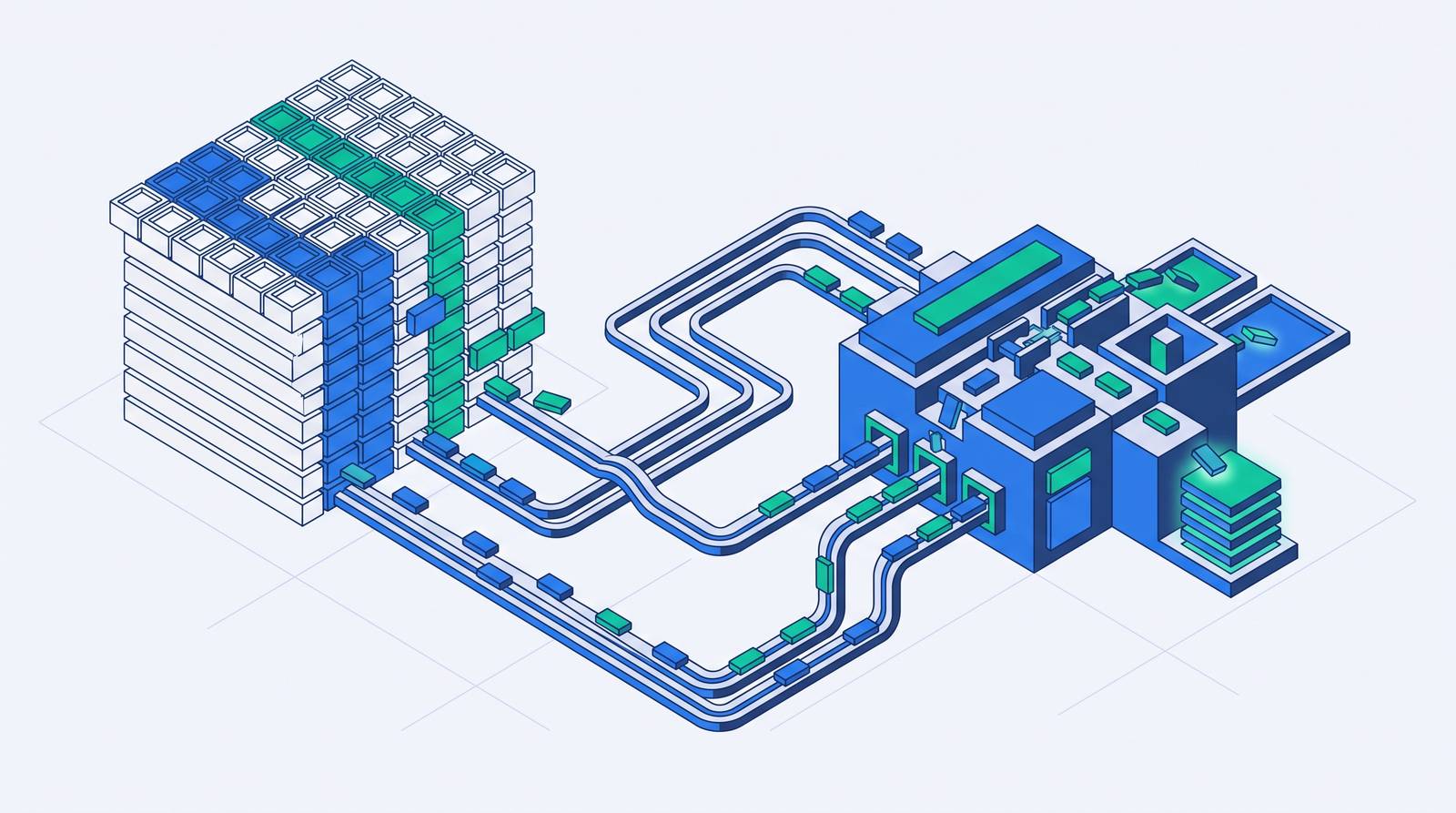
The gap between sending an invoice and collecting cash is mostly a data problem, not a payment problem. Your customer usually knows they owe you money. The friction is everything that happens between your ERP spitting out a file and that payment landing correctly in your ledger. CSV sync and data mapping are the plumbing behind that gap. They are either working quietly in the background or costing you real money. There is no third option.
Invoice data does not live in one place. It starts in ERPs, CRMs, usage databases, and spreadsheets, and it has to end up somewhere unified enough to act on. Payments arrive throughout the day while general ledgers often update overnight. That lag alone makes real-time reconciliation impossible without deliberate architecture. Finance teams will tell you the bottleneck is not how customers pay. It is the manual labor of moving data between systems that were never designed to talk to each other.
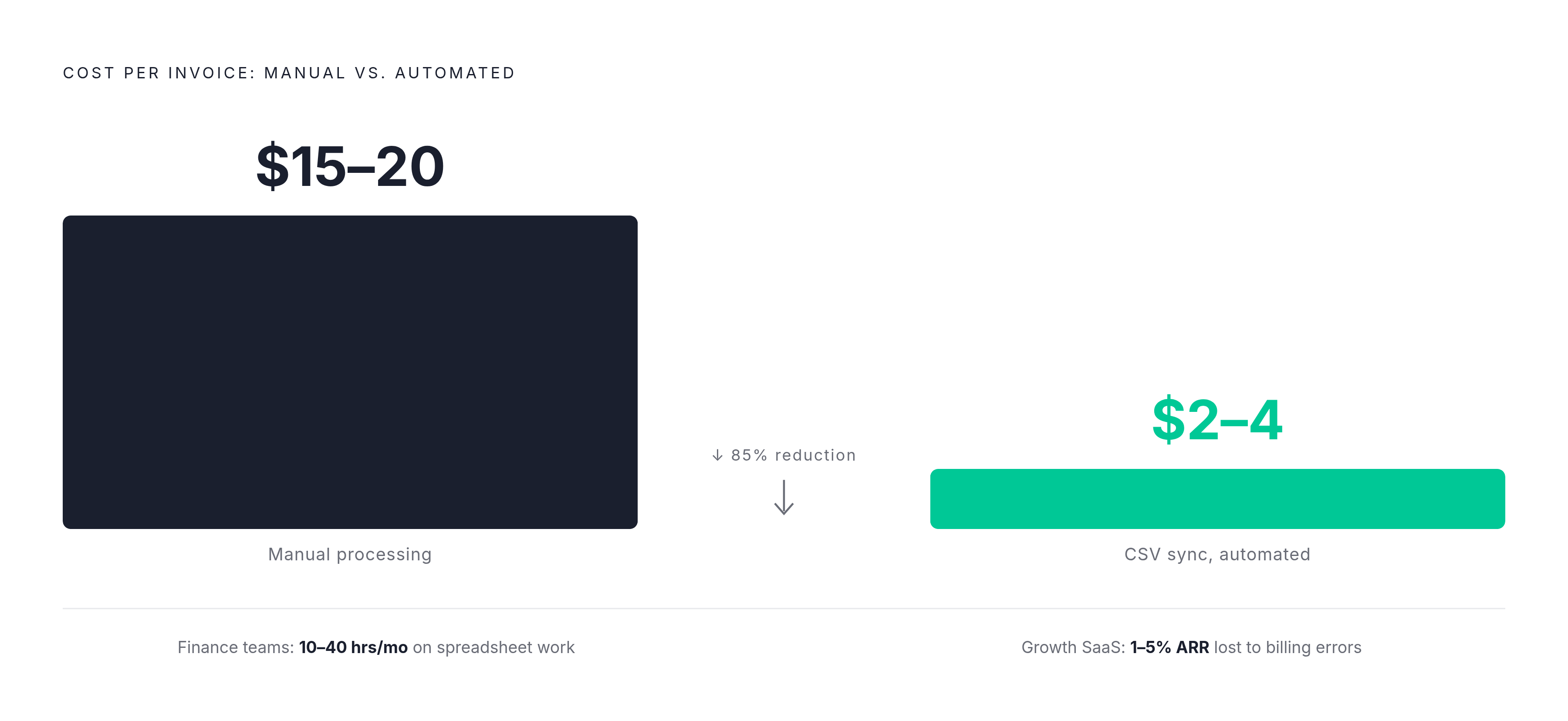
CSV is how those systems talk. Manual, per-invoice processing runs somewhere between $15 and $20 per invoice. Finance teams spend anywhere from 10 to 40 hours a month on spreadsheet work. Growth-stage SaaS companies lose between 1 and 5 percent of ARR to manual billing errors, and that figure compounds fast. So the question worth answering is: what does it actually take to automate this reliably?
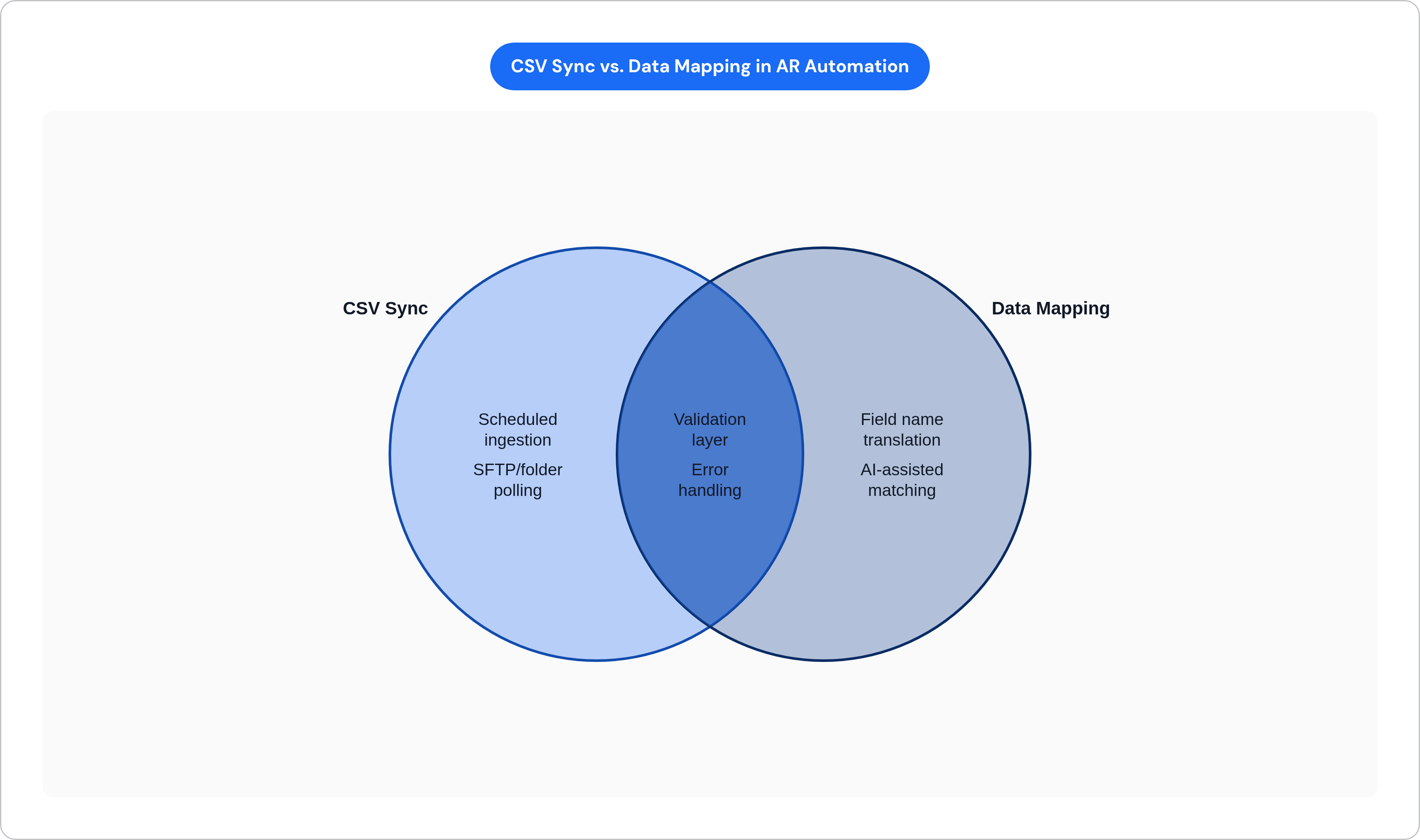
In an AR automation context, CSV sync is not a single button you press once. It is a recurring, scheduled process of ingesting, validating, transforming, and loading invoice or payment data from flat files into your AR platform, on repeat, without a human babysitting it.
A one-off import and an actual sync are not the same thing. Anyone can drag a file into a system. CSV sync means scheduling, automation, and error handling that runs continuously without manual intervention. The moment it requires a person to kick it off, it is a chore, not a sync.
CSV sync shows up in AR workflows in a few different places:
- ERP to AR platform. Exporting open invoices from your accounting software into a collections tool.
- AR platform to bank. Syncing payment records or remittance data back into the ledger.
- Customer portals. Converting whatever format a customer portal spits out into something your AR platform can actually read.
- Usage-based billing. Transforming product telemetry like API calls or compute minutes into billable line items.
That last use case, usage-based billing, is genuinely underappreciated in its complexity, especially in SaaS. Leading AR platforms maintain connections to dozens of different customer portals, and each one has its own output format. One wants XML. Another exports CSV. A third uses EDI. Treating them as the same problem is exactly how integrations break.
Cloud deployment dominates the AR automation market, which makes API-first integration the clean, modern answer. But API access is not always available, and when it is, it is not always cost-effective for smaller integrations. CSV sync is the pragmatic bridge layer. Not a legacy embarrassment. Just infrastructure that is either managed well or managed poorly.
The Four Stages Every CSV-to-AR Pipeline Moves Through
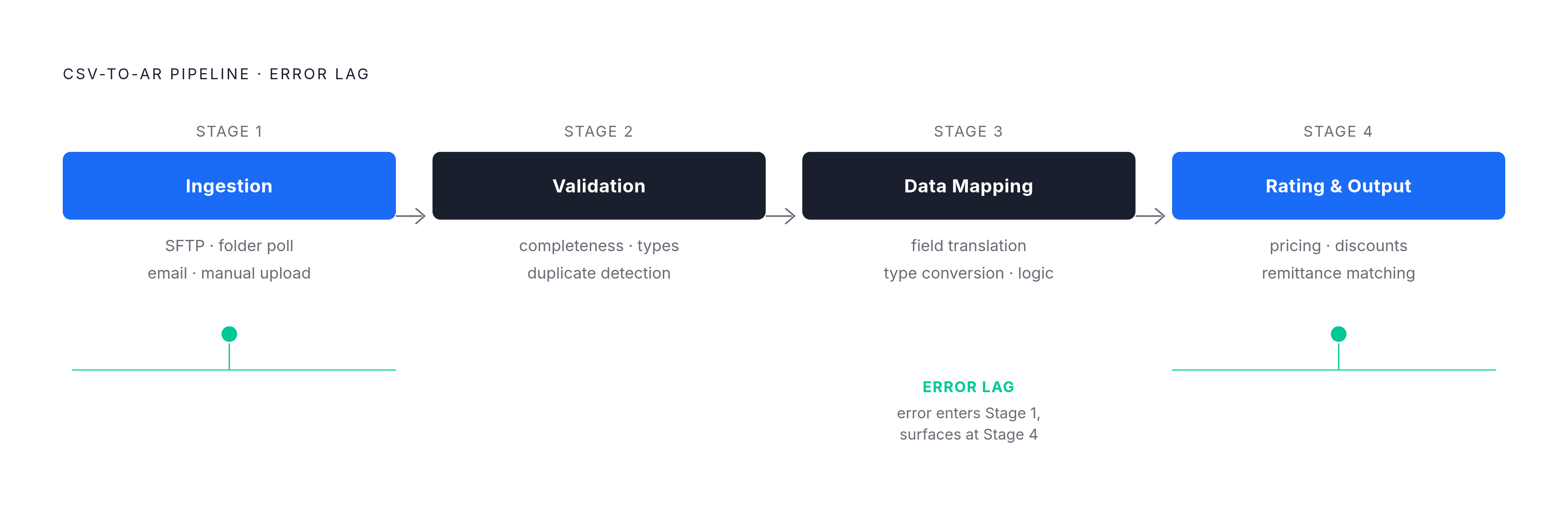
Every CSV pipeline, regardless of how sophisticated the platform claims to be, moves through four stages. Knowing them helps you pinpoint exactly where things go wrong when they do. And they will.
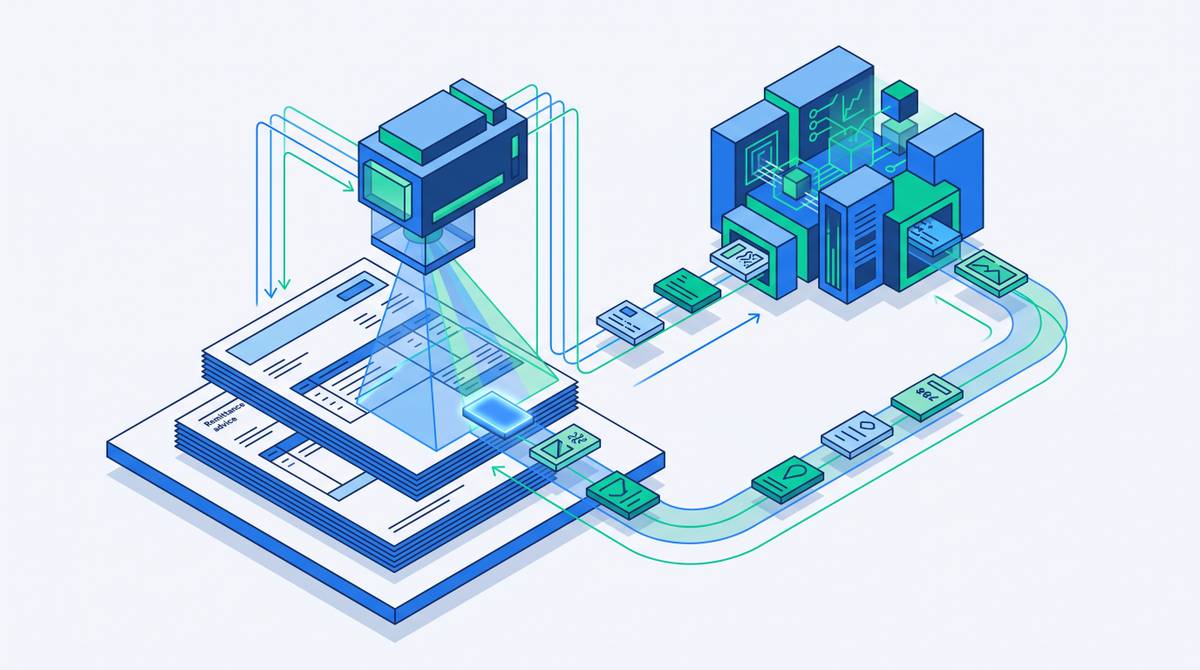
Stage 1: Ingestion. Getting raw data into the platform. Sources vary: ERP exports, product databases, analytics platforms, third-party billing systems. Delivery methods also vary: drag-and-drop upload, scheduled folder polling, SFTP pull, email attachment parsing. The delivery method determines how much latency your sync introduces. A manual upload and a scheduled SFTP pull behave very differently at month-end when every hour counts.
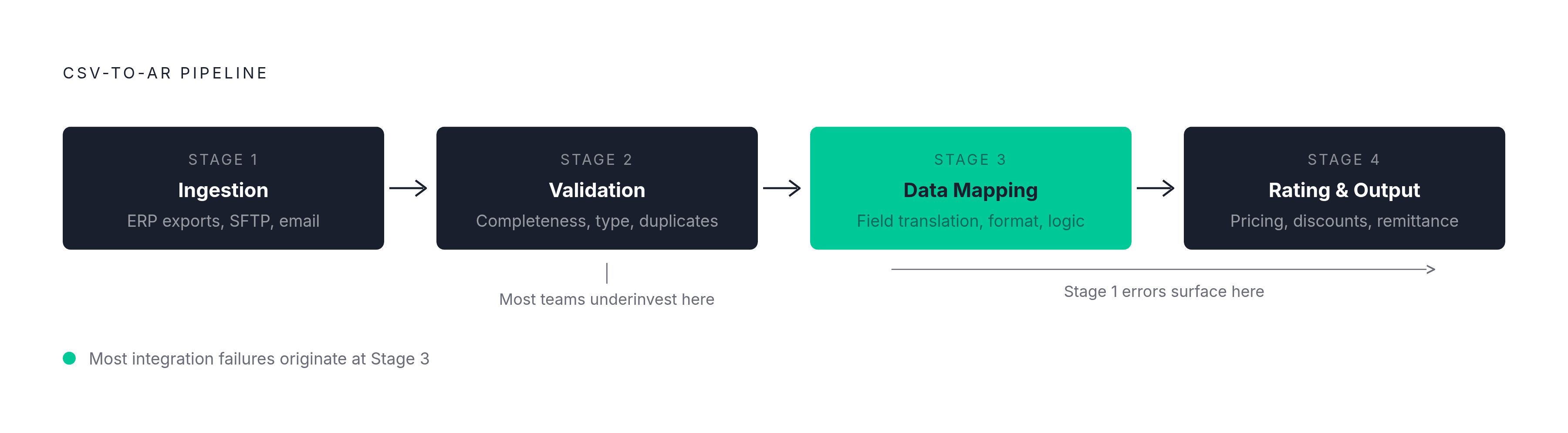
Stage 2: Validation. Where bad data should get caught before it corrupts everything downstream. Good validation checks for field completeness, data type conformance (are dates formatted correctly, or are numbers stored as text?), customer ID matching against existing accounts, and duplicate detection. CSV exports are incremental and love to re-include rows from prior runs. Validation is the stage most teams underinvest in, and an error that passes through here does not stay contained.
Stage 3: Data Mapping. Where most integration failures originate. Mapping translates source field names and formats into whatever schema the target system expects. It handles not just field names, but data type conversions, currency formats, date conventions, and conditional logic. This stage deserves its own section, so there is more on it below.
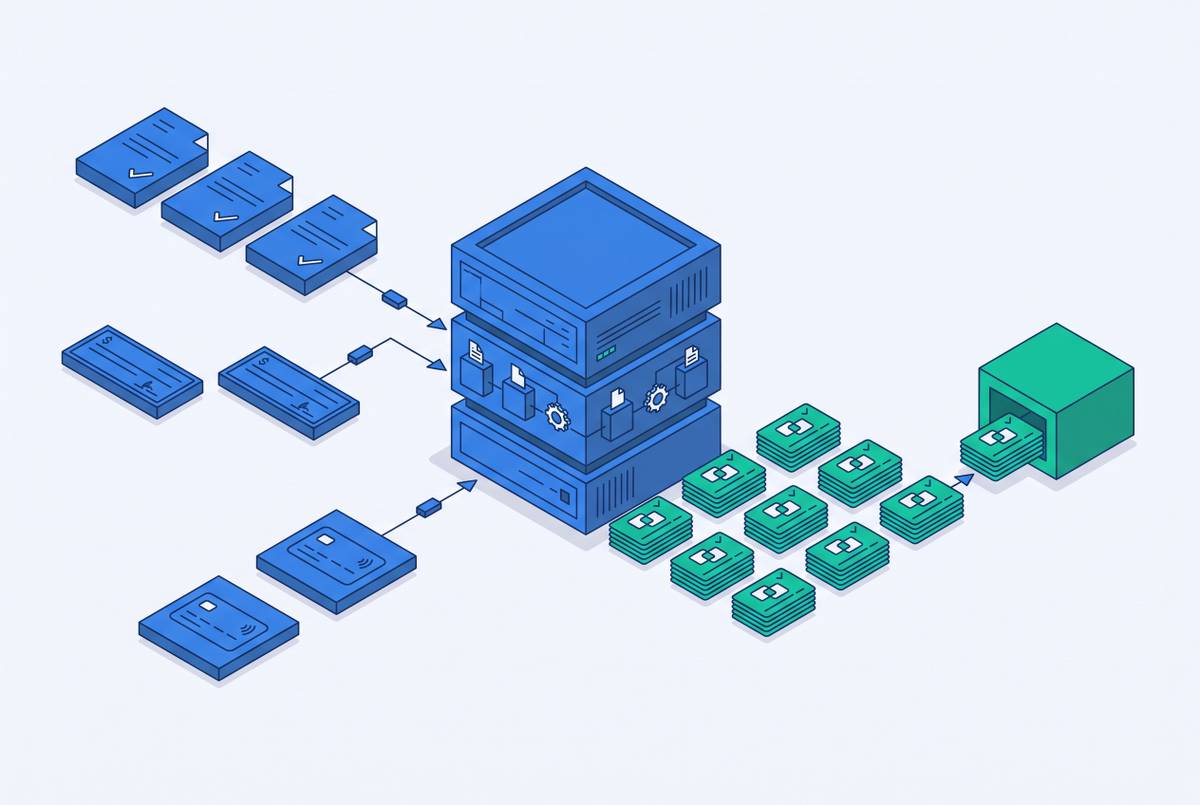
Stage 4: Rating and Output Generation. Where business rules get applied and invoices or matched payment records get produced. A rating engine takes your pricing tiers, discount schedules, and contract terms and applies them to usage quantities. For remittance matching, modern AR platforms layer deterministic rules first, then AI-powered suggestions with confidence scoring for the trickier cases.
The output is only as clean as what survived the earlier stages. The pipeline is linear. The failure modes are not. An error introduced at ingestion will not surface until rating, which is a genuinely frustrating debugging experience. You think something broke at the end. It actually broke at the beginning.
What Data Mapping Actually Does and Why It Is Harder Than It Looks
Data mapping is the process of defining how a field in one system corresponds to a field in another. On paper, straightforward. In practice, it breaks constantly, and the reasons are almost always boring.
There is no universal invoice schema. Every ERP, billing tool, and customer portal has its own field names and conventions. "Invoice date" in one system is "inv_dt" in another and "Date of Issue" in a third. Some platforms, like Sage Intacct, require CSV headers to match their template exactly, down to spelling, capitalization, and spacing. Commas inside text fields need to be wrapped in double quotes or the entire row shifts columns. Regional conventions around dates and numbers make it worse: MM/DD/YYYY versus DD/MM/YYYY, period versus comma as a decimal separator. These differences silently corrupt data when files from multiple sources get combined, and nobody notices until something downstream looks wrong.
There are three approaches to mapping, in increasing sophistication:
- Manual mapping. A human specifies every field correspondence by hand. Fragile, slow, and breaks the moment a schema changes.
- Semi-automated. The platform suggests matches and a human reviews them. Faster, but still dependent on someone being available to review.
- Automated or AI-powered. Machine learning analyzes field names, samples field contents, and learns from prior accepted mappings to propose matches. Handles synonyms, inconsistent naming, and even field names in different languages.
Beyond field-name matching, mapping also handles transformation rules: converting a Unix timestamp to a readable date, splitting a full name into first and last fields, combining line items into a single total. These are not exotic requirements. They come up in almost every real integration, and they each need to be explicitly defined somewhere.
The dedicated data mapping software market was valued at around $1.5 billion in 2023 and is projected to reach $4.2 billion by 2032. That trajectory signals something concrete: the enterprise world has stopped treating data mapping as an afterthought and started treating it as infrastructure. That shift did not happen because people got interested in data mapping. It happened because enough teams got burned badly enough that the cost of ignoring it finally became visible.
The Failure Modes That Derail CSV Sync in Production
Knowing the stages is one thing. Knowing what breaks them is more useful. There are four failure modes worth understanding, and at least two of them will be familiar to anyone who has spent real time managing AR operations.
Schema drift is the silent killer. It happens when a source system changes its structure without telling anyone downstream. New columns appear. Old ones get renamed or deleted. In a traditional pipeline, this means transformation rules throw errors, field mappings become invalid, and validation rules start rejecting records. ERP upgrades, billing system changes, portal format updates are the common triggers. Finance teams typically find out when a batch fails, at the worst possible time, which is always month-end.
Column mismatches are the most frequent cause of failed CSV imports. Column names or ordering differ from what the platform expects. Excel auto-formatting silently converts invoice numbers to scientific notation and dates to serial numbers. Mixed date formats within a single column, especially common in files assembled from multiple sources, cause cascading failures that are tedious to trace and even more tedious to explain to a CFO.
Duplicate records. Incremental CSV exports love to re-include rows from prior runs. Duplicates distort DSO calculations, AR aging reports, and cash flow forecasts. The right fix is composite keys or hash-based deduplication at the transformation layer, not at the point of use where the damage is already done.
Scheduled batch sync masking real-time gaps. Many AR, ERP, and banking systems sync on overnight schedules. The ledger reflects yesterday. Collections decisions made on stale data lead to chasing invoices already paid, or missing genuinely overdue accounts. This is a design choice, not a technical inevitability. Solving it requires deliberate architecture, and a lot of platforms simply do not bother because it is easier not to, though some tools, like Invoice Butler, an AI-powered accounts receivable software that automates collections follow-ups across email, phone, and SMS while pairing AI agents with human collections experts, are built to act on current payment status rather than stale overnight data.
DSO climbed 9.5 percent in 2026 per HighRadius data. Data latency and mapping failures are contributing factors. Not background noise. The actual mechanism.
How AI Is Changing the Mapping and Validation Layer
The core shift is from brittle, rule-based mapping to adaptive, learning-based mapping. Traditional mapping requires a human to define every field correspondence once and then maintain it every time a schema changes. That is a permanent tax on your engineering and finance teams, and it compounds over time as integrations multiply. AI-powered mapping does not eliminate that tax entirely, but it reduces it substantially.
AI-powered mapping analyzes source and target schemas, samples field contents, interprets synonyms, and learns from prior accepted mappings. The practical result is near-zero-touch mapping for common invoice fields, with flagged exceptions for genuinely ambiguous cases. Compared to manually updating a mapping spreadsheet after every ERP upgrade, that is a meaningful improvement, even if it sounds modest.
A few developments worth understanding as of early 2026:
Natural language interfaces. Some platforms now let you describe a mapping in plain language ("map their 'PO Reference' field to our 'purchaseorderid'") instead of configuring it in a UI. This puts the work in the hands of finance analysts rather than developers, which changes the economics of integration maintenance significantly. An analyst who can fix a mapping without filing a ticket is worth a lot at month-end.
Proactive anomaly flagging. AI validation layers now catch missing or unexpected columns before any data is imported. Schema drift gets caught at ingestion, not in a failed batch run at 11 PM on the last day of the quarter. If you have lived through that specific experience, you understand why this matters.
Agentic pipelines. This is a significant development from 2025 and 2026. AI agents now autonomously orchestrate multi-step migration workflows: profiling source data, generating mapping rules, executing transfers, validating output, retrying failed segments, without human input at each stage. The human role shifts from executing the pipeline to reviewing exceptions and approving high-stakes decisions.
Microsoft acquired CSV mapping specialist Osmos in January 2026 and folded the technology into Microsoft Fabric for agentic data engineering. When a vendor that size acquires a niche mapping tool and makes it core infrastructure, that says something concrete about where the category is heading.
One thing AI does not fix: garbage-in, garbage-out still applies. If source data is structurally broken, AI mapping surfaces the problem rather than solving it. That is useful. It is not magic.
No-Code CSV Sync Tools and How They Fit Into AR Platform Stacks
No-code CSV sync tools occupy a specific gap in the stack. They sit between full API integration, which is ideal but not always available, and fully manual uploads, which are cheap and brittle. They exist because most finance teams do not have dedicated integration engineers. They probably should not need them for this.
What no-code tools actually handle:
- Scheduled ingestion without engineering involvement. Folder polling, SFTP, email parsing on a defined cadence.
- Reusable mapping templates. Define the mapping once, apply it to every subsequent file from that source.
- Built-in validation libraries. Type checking, range validation, duplicate detection, without writing rules from scratch.
- Plain-language error reporting. So a finance analyst, not a developer, can diagnose and resolve a failed sync.
A few tools worth knowing as of early 2026:
Integrate.io is cloud-native with over 220 pre-built connectors across databases, SaaS tools, CRMs, REST APIs, and flat files. It is strongest for teams that need CSV sync as part of a broader ETL strategy.
OneSchema has the strongest pre-built validation library among embedded CSV importers, with over 50 data types and auto-fixers. It handles recurring imports via a separate FileFeeds product. Best suited for platforms embedding an importer for their own end customers.
Dromo processes data client-side, which matters when customer data cannot leave the browser. It is also the only major embedded CSV importer with fully transparent pricing, which is either a selling point or a red flag depending on what competitors are hiding.
The build-versus-buy question comes down to maintenance cost. Building validation and mapping logic in-house is faster in week one. It becomes expensive in month seven when source schemas change and someone has to file an engineering ticket to update the mapping rules. No-code tools shift that maintenance burden to the tool vendor, which is where it belongs.
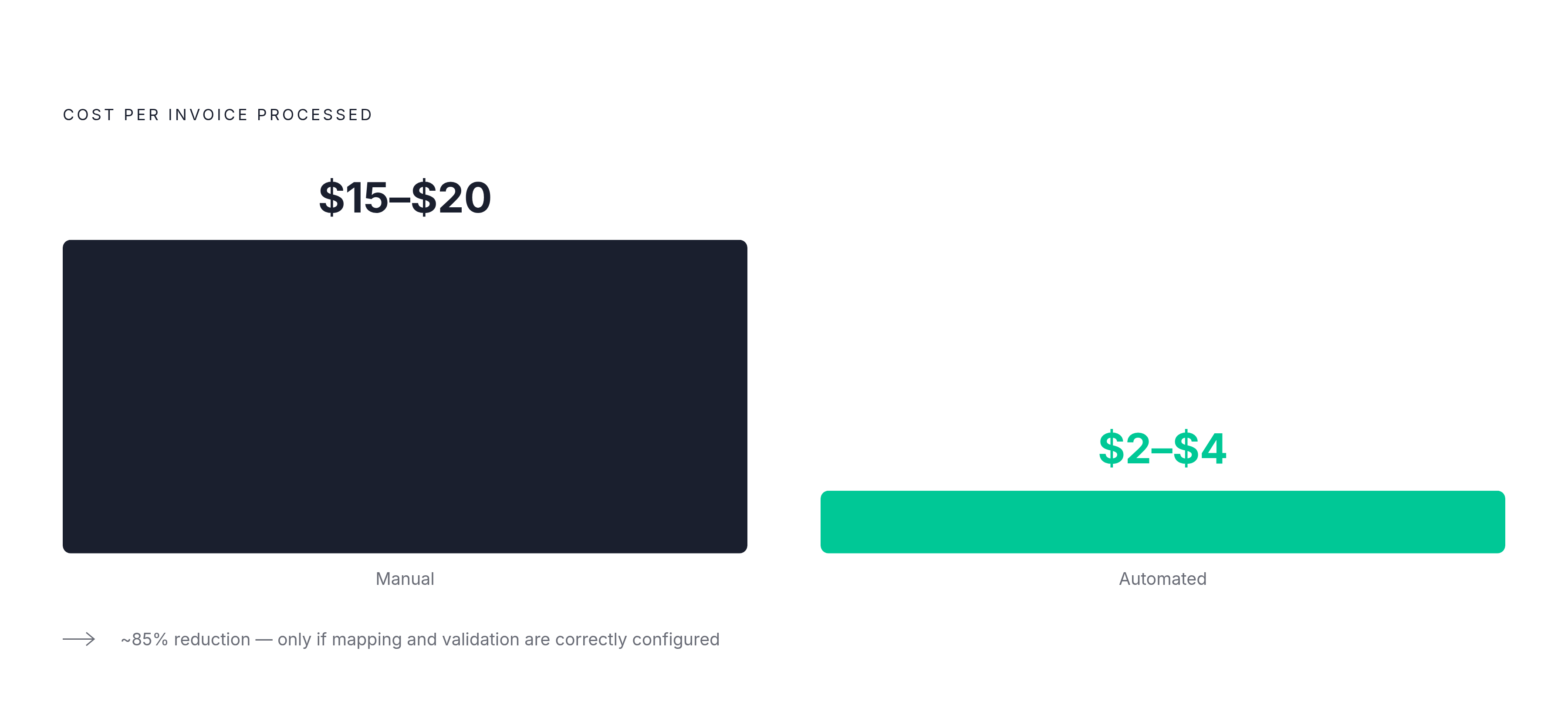
When automation replaces manual CSV work correctly, per-invoice processing costs drop to somewhere between $2 and $4, compared to $15 to $20 for manual processing. That reduction only holds if the mapping and validation layers are correctly configured. A poorly mapped sync generates errors that end up more expensive than the manual process it replaced. The tool is not the fix. The configuration is the fix.
What Finance Teams Should Evaluate When Assessing CSV Sync in an AR Platform
Every platform supports CSV. That is table stakes, not a differentiator. The real question is how a platform handles CSV badly, because it will, eventually, and what happens next is what actually matters.
Start with three questions that cut through most sales conversations:
- What happens when a schema changes mid-month?
- Who gets notified when a sync fails, and how fast?
- Can a finance analyst resolve a mapping error without filing a support ticket?
Those three questions will tell you more than any feature comparison sheet. After that, here is what to probe specifically:
Validation depth. Does the platform catch data type errors, duplicates, and missing fields before they enter the pipeline, or after? After is too late, and you will find out at the worst possible moment.
Mapping resilience. Does mapping break when a column gets renamed, or does the platform use fuzzy matching or AI-assisted mapping to adapt? Ask vendors specifically how they handle schema drift. A vague answer is still an answer. It tells you they have not had to think about it seriously.
Scheduling and monitoring. Can you define sync frequency? Does the platform alert on failure? Can you see a log of what ran, when, and what got rejected? Platforms that obscure this information are hiding something, even if only by accident.
Error resolution workflow. When a record fails validation, what happens? Does it get quarantined with a clear explanation, or does the whole batch reject? Can a non-technical team member fix it without looping in engineering? The best platforms let finance own their sync health for routine issues. The worst ones make every error a support ticket.
Deduplication logic. This one almost never comes up in demos, which is exactly why you should ask about it. Ask how the platform handles duplicate records from incremental CSV exports. If the answer involves the phrase "that shouldn't happen," that is your cue to wrap up the call.
CSV sync and data mapping are not the exciting part of AR automation. Nobody leads with them in a demo. But they are the difference between a platform that holds up in production and one that looks great until the first ERP upgrade breaks everything and you are staring at a failed batch at 11 PM wondering who to call.